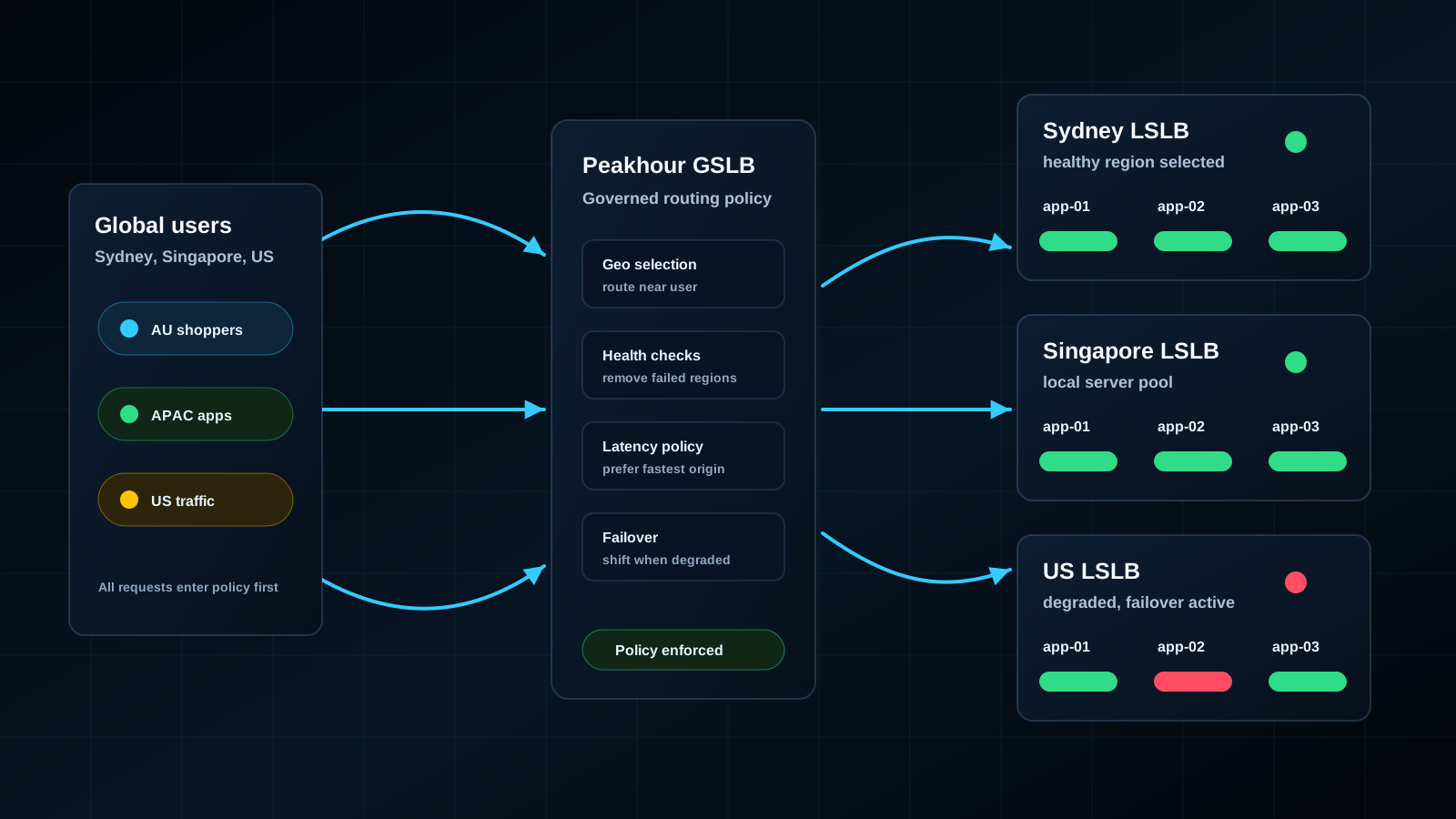
Failover view: Verify that traffic stayed on healthy paths during disruption.
Cloud Load Balancing
Cloud Load Balancing
Route global users to the healthiest region, then balance each request across local server pools with health checks, policy, and failover visible in one governed delivery path.
Route Globally, Balance Locally, Recover Fast
Global Server Load Balancer
Requests are routed to the healthiest region using geography and performance signals, so users land on the best available entry point before any local balancing starts.
Local Server Load Balancer
Inside the selected region, traffic is distributed across healthy origin pools using policy such as round robin or IP stickiness to keep latency stable and origin utilisation predictable.
Real-time Analytics and Monitoring
Health state, balancing behaviour, and failover outcomes remain visible so teams can confirm delivery continuity and tune routing with production evidence.
Route Each User to the Healthiest Region First
Peakhour evaluates regional health and connection performance before forwarding traffic, so each request enters the platform through a region that can serve it reliably.
This keeps global delivery resilient when one region degrades and supports multi-region architectures without relying on manual DNS switching.
Balance Across Local Origin Pools and Fail Over Cleanly
After regional selection, requests are distributed across healthy local servers with policy that matches your application behaviour and session requirements.
Unhealthy nodes are removed from rotation automatically, so failover occurs inside the same governed request path rather than as a separate emergency process. Round robin allocates requests across available servers, while IP stickiness preserves session consistency when it matters.
Operational Evidence
1
2
Dashboard Evidence Validates Routing and Failover Decisions
The diagram explains control flow; dashboard telemetry confirms it in production. Teams can validate regional distribution, local balancing behaviour, and failover response without turning screenshots into the story itself.
Policy tuning: Adjust global and local balancing with production evidence.
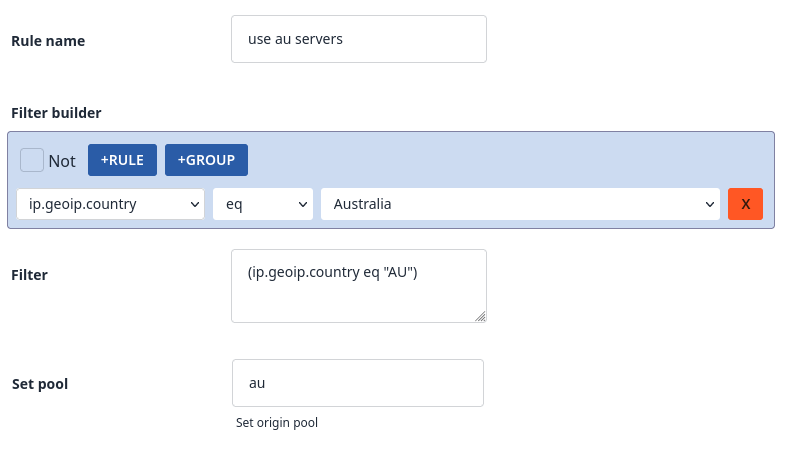
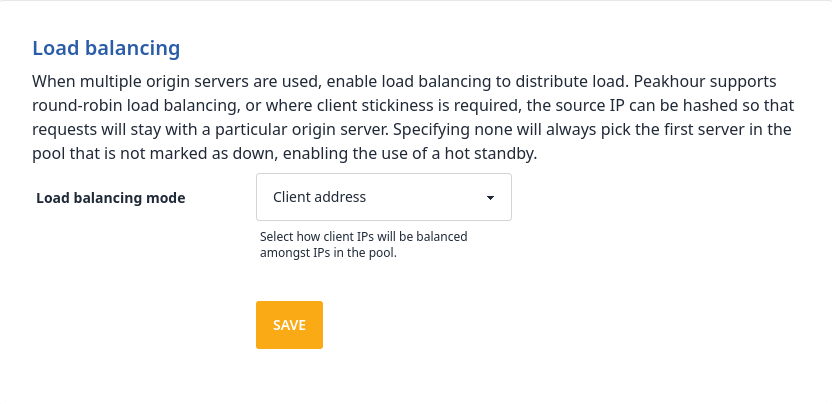
Regional distributionSee traffic by region
Origin availabilityConfirm node status
Related evidence
Traffic Distribution Proven in Production
Customer examples that connect Peakhour controls to production outcomes.

Empower Your Traffic Distribution
Peakhour's Load Balancer provides traffic routing tailored to your needs, whether through Global Server Load Balancer for wider reach and geo-selection or Local Server Load Balancer for focused and efficient traffic management within specific locations.
Explore Our Performance Platform
Learn More About Load Balancing

Feature in Focus: Multi-Origin Load Balancing
Websites with a global audience need more than static delivery. They need geographic multi origin load balancing.
Read More
Consistent Hash with bounded loads
An enhancement over basic consistent hashing, bounded-load hashing ensures a more balanced distribution of keys across servers.
Read More
Locality Sensitive Hashing
An overview of Locality Sensitive Hashing and its application in load balancing and cache distribution.
Read More