Turn mixed website traffic into explainable edge decisions
Peakhour protects websites by separating users, APIs, bots, exploit attempts, and layer 7 floods before they reach origin, then applying WAF, bot, API, DDoS, and rate controls with a decision record attached to each action.
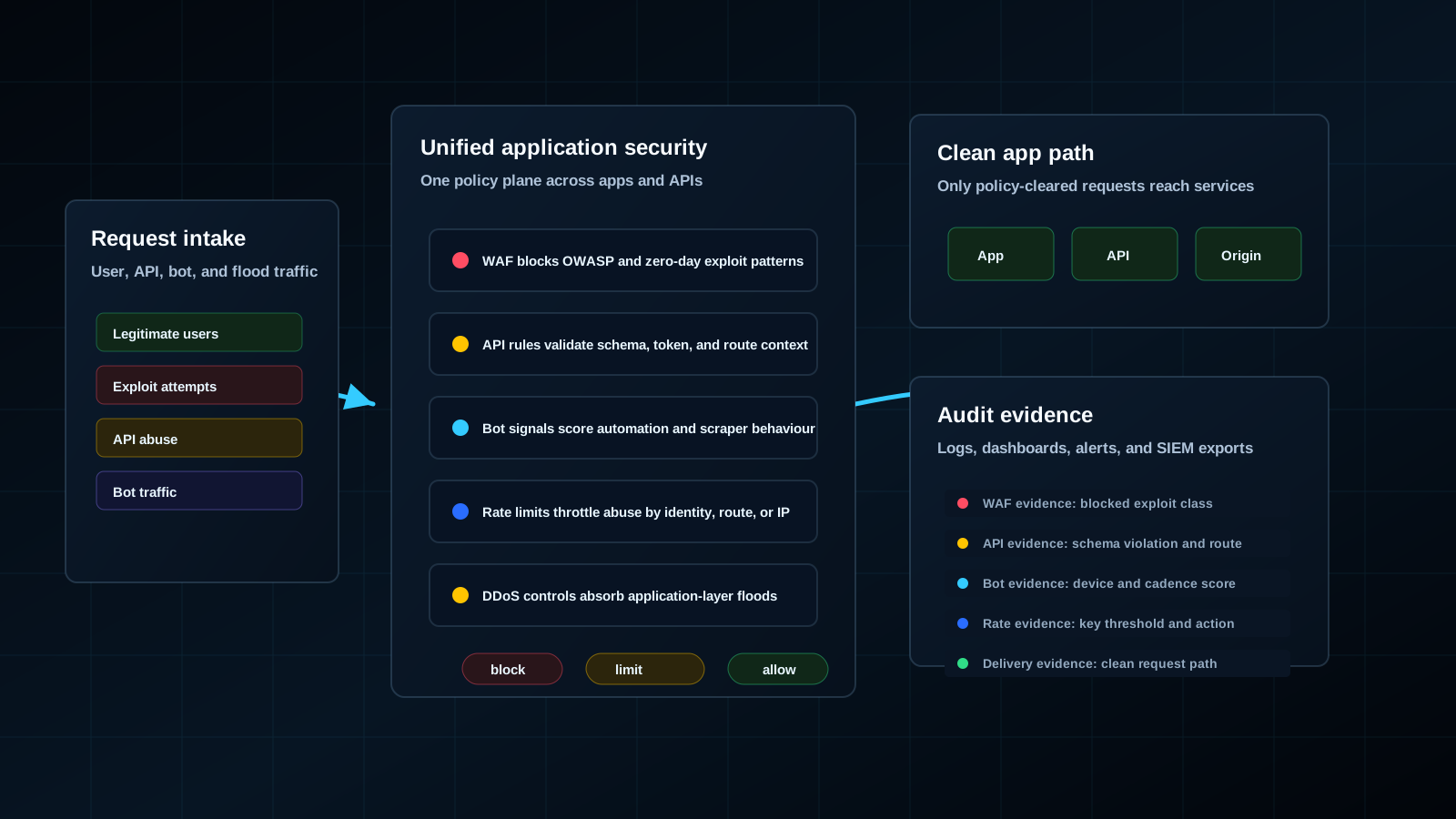
Website Risk Starts as One Noisy Request Stream
A public website receives browsers, checkout traffic, API calls, crawlers, credential tools, scrapers, vulnerability probes, and flood traffic through the same visible surface. If that stream reaches origin unclassified, security teams lose the chance to choose the right action early.
Exploits Hide Beside Normal Pages
SQL injection, XSS, suspicious payloads, and zero-day probes often target the same login, search, cart, and content routes customers use every day.
Automation Changes Shape Quickly
Credential stuffing, scraping, fake account creation, and price monitoring shift IPs, devices, cadence, and headers to look less like a single blocked source.
Availability Attacks Burn Shared Capacity
Layer 7 floods, retry storms, and route-specific bursts can drain application, database, search, and API resources without looking like a simple network event.
Put the Website Control Point at the Edge
Peakhour evaluates each request before origin delivery. The control path combines WAF rules, API validation, bot signals, keyed rate limits, and DDoS pressure controls so the action matches the request context.
-
Block Exploit Patterns
Use managed WAF policy for OWASP Top 10 patterns, suspicious payloads, and emergency rule updates while keeping exceptions visible for review.
-
Validate Web and API Context
Treat route, method, schema, token, content type, session history, and application area as decision inputs instead of relying on one global rule.
-
Challenge Uncertain Automation
Score browser, bot, scraper, credential, proxy, and cadence signals so clean visitors continue while suspicious clients meet proportionate friction.
-
Throttle Expensive Bursts
Apply keyed rate limits by route, identity, IP, geography, method, or behaviour before expensive traffic reaches dynamic services.
Every Security Action Keeps Its Decision Trail
Website security becomes operational when teams can see why a request was blocked, challenged, throttled, absorbed, or delivered. Peakhour keeps the signal, policy, action, and request path together for incident response and tuning.
The result is a website security program that operators can explain: what arrived, which control matched, what action Peakhour took, and what reached the application.
Controls That Work Together on the Website Path
WAF and WAAP Policy
Block exploit patterns, validate payloads, preserve exceptions, and align rule changes with live website behaviour.
Bot Management
Separate customers, verified crawlers, monitors, scrapers, credential tools, and evasive automation before they share the same app path.
DDoS and Rate Controls
Absorb layer 7 pressure and throttle route-specific bursts by the key that explains the abuse: IP, account, session, route, or region.
API-Aware Protection
Protect the API calls inside modern websites with route, schema, token, and behaviour context alongside browser security controls.
Decision-Led Tuning
Use decision logs and dashboard review to move rules from monitor to enforce, narrow false positives, and document control changes.
Clean Delivery Is the Visible Outcome
The point is not a larger checklist of security features. The point is a governed delivery path: known-good requests keep moving, uncertain clients meet measured friction, confirmed attacks are stopped, and the application receives traffic the team can account for.
Peakhour can run as the edge in front of your site or add security intelligence alongside an existing CDN or edge deployment where that operating model fits.
Related evidence
Website Security in Practice
Customer examples that connect Peakhour controls to production outcomes.

National Gallery Australia
Government Security Compliance and Bot Management
How Australia's National Gallery used Peakhour controls for bot management, DDoS protection, content scraping controls, and stronger digital visitor operations.

Stone & Chalk
Application Security for a Fintech Hub
How Australia's leading fintech hub strengthened application security, reduced exposure to emerging threats, and supported hundreds of startups with enterprise-grade controls.
Explore the Website Security Control Set
Web Application Firewall
Block application-layer exploit attempts with managed WAF policy and reviewable exceptions.
API Security
Protect the API routes inside modern websites with schema, token, bot, and rate signals.
Bot Management
Classify automation, scrapers, credential tools, verified crawlers, and legitimate users.
DDoS Protection
Absorb application-layer pressure before it drains origin capacity and customer-facing workflows.
Application Security Platform
Run website, API, bot, DDoS, and rate controls in one edge security operating model.
Web Performance Optimisation
See how cleaner, better-classified traffic also supports faster delivery and lower origin load.
Send Cleaner, Better-Explained Traffic to Origin
Bring the routes that matter: login, checkout, search, content, forms, and APIs. Peakhour can help map the traffic mix, choose controls, and keep decision records attached to each website security action.
Learn More About Website Security Controls

Layer 7 DDoS Protection: Application Security Through Strategic Caching
Discover how Full Page Caching can help mitigate layer 7 DoS attacks.
Read More
HTTP Security Headers: Essential Browser Protection for Web Application Security
Learn how to protect your clients with these HTTP Headers.
Read More
IP Threat Intelligence: Advanced Reputation Management for Application Security
Discover and block threats through data enrichment using managed IP reputation lists.
Read More