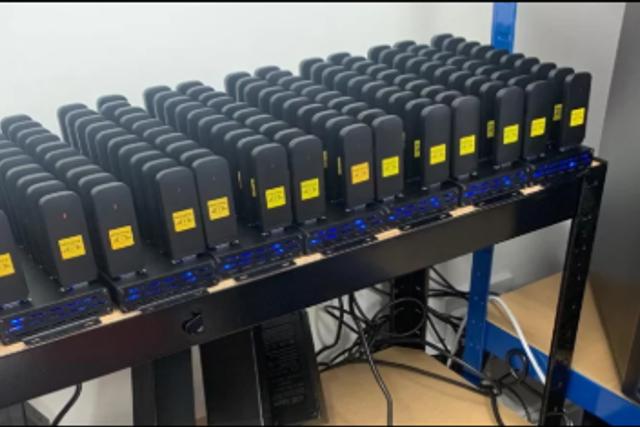

A residential proxy network is disrupted on Tuesday. On Wednesday, a password-spraying campaign is still reaching your login route through consumer IP addresses. The takedown changed upstream supply. It did not stop the campaign at your edge.
Legal action, platform enforcement, domain seizures, malware removal, and industry coordination matter. They can protect device owners, remove capacity, raise operating costs, and expose relationships that were previously difficult to see. They do not inspect the request currently approaching your application or decide whether it should be allowed to change an account.
That is the boundary security and fraud teams need to keep clear. A takedown is an ecosystem intervention. A provider label is time-bound intelligence. A request decision is a control in the path of the work being attempted.
The first article in this series compares what the IPIDEA and NetNut actions changed. The second examines why a network can disappear while its former IP inventory remains visible elsewhere. This final article starts after enforcement: when the network has changed, the headlines have moved on, and the application still needs to handle live traffic.
Disruption Changes the Network, Not the Destination's Job
Google's January 2026 IPIDEA disruption combined legal action against control and marketing domains, intelligence sharing, and Google Play Protect enforcement. Google said the action significantly degraded the network and reduced its available device pool by millions. It also warned that reseller agreements created overlap between exit pools and made definitive attribution difficult.
In July, Google took coordinated action against NetNut. Google said it disabled accounts and services used for command and control, shared intelligence, and used Play Protect against applications incorporating known NetNut SDKs. It estimated the network at a minimum of two million devices and reported 316 distinct threat clusters using suspected NetNut exits during one week in June.
Those are Google's findings and estimates, not a claim that every address associated with either provider was malicious. They still show why enforcement deserves support. Reducing compromised supply helps the people whose connections were being used and makes abuse infrastructure more expensive.
The destination's exposure is different. Google also said that operators affected by the earlier IPIDEA disruption began buying capacity from competitors and acting as resellers. A storefront can lose part of its own pool while continuing to sell access sourced elsewhere. Buyers can move as well. Demand, tooling, accounts, target lists, and attack behaviour do not disappear with a control domain.
If your production rule is provider = IPIDEA, the disruption may make that rule less accurate precisely when the incident looks most successful.
Expect Migration Before You Expect Silence
Post-disruption network-layer observations reinforce that warning, but they need careful attribution. Lumen's Black Lotus Labs reported from its own backbone telemetry that IPIDEA lost traffic and victim population after the January action, then rebuilt infrastructure and recovered. The same Black Lotus Labs proxy-ecosystem report describes backend connections and resale relationships across several networks.
That report reflects Lumen's visibility, detection methods, and assessments. It is not a complete census of the internet, and an infrastructure relationship does not prove that every request, exit, or customer belongs to one named operator. Its operational lesson is narrower and useful: supplier and reseller relationships can change faster than a static provider label.
After a disruption, assume four kinds of movement until evidence shows otherwise:
- existing exits reconnect through replacement infrastructure;
- a provider buys or resells another pool;
- customers shift to a different storefront or whitelabel service;
- the same operator rotates through new IPs while keeping its browser, credentials, request sequence, and target set.
The defender's task is not to guess the next brand name. It is to keep the intelligence current and preserve enough behavioural continuity to recognise the work after the address changes.
Rebaseline the Intelligence
A disruption date should trigger a data review, not an automatic claim of coverage.
Take a pre-action baseline by route: request volume, proxy prevalence, provider attribution, challenge completion, authentication outcomes, blocks, 429 responses, transaction completion, origin work, analyst review, and support contacts. Then compare the same measures immediately after the action and as the market adapts.
Refresh feeds and internal observations on their own collection cadence. Do not merge a historical provider association into a permanent property of the IP. For each proxy or network result, retain:
observed_at
indicator or network value
provider attribution, if any
attribution source and dataset version
confidence and reason
first_seen and last_seen where available
observed_at matters because a residential address can leave a pool, return to a different subscriber, or appear under another reseller. Confidence matters because “seen as an exit” and “attributed to this provider” are different claims. Provider attribution should be allowed to decay, be superseded, or remain unknown.
This is the provenance contract described in What a Residential Proxy Decision Log Should Contain. Keep the current request, the time-bound observation, the policy revision, the selected action, and the outcome connected. A retrospective feed correction should not silently rewrite what the control knew at decision time.
Correlate the Actor's Work Across IP Rotation
IP rotation is meant to break IP-only memory. Build continuity from the parts of the operation that are harder or more expensive to change together.
Useful correlation keys include:
- account, tenant, API credential, session, or target object;
- credential reuse and failure outcomes across many accounts;
- versioned TLS, HTTP, browser, or device fingerprint cohorts;
- route order, timing, retry behaviour, and automation cadence;
- checkout, promotion, recovery, or payment-instrument patterns;
- request cost and repeated origin or database work.
None of those fields proves identity by itself. A common browser fingerprint can group many legitimate users, and an account can be shared. The value comes from agreement across independent observations and from the route being protected.
Residential Proxy Detection for APIs Without JavaScript applies the same principle to machine traffic: use network and protocol evidence in the request path, then combine it with the API identities and outcomes already available. Do not make browser JavaScript a prerequisite for detecting rotation against an API.
Keep the Action Route-Specific
The takedown does not tell you what to do with a request. Neither does the proxy flag. As A Proxy Flag Is Not a Security Policy explains, the signal should change how much corroboration or friction a request needs, not select one global response.
Use the action that fits the route and the cost of error:
- Allow low-risk activity when the session and behaviour are consistent.
- Log new or uncertain intelligence while measuring the local population.
- Challenge an interactive client when it can provide more evidence and has a safe recovery path.
- Rate limit repeated or expensive behaviour across the account, client cohort, route, token, and outcome keys that survive IP rotation.
- Step up authentication or transaction verification when the request can transfer account control or value.
- Block when evidence is strong, harm is current, and a narrower action cannot protect the route.
Account creation, login, password reset, checkout, and public APIs have different identities and failure modes. Five Routes, Five Residential Proxy Decisions provides a concrete policy split. The important post-disruption change is to tune each contract with current observations rather than adding a site-wide deny rule for yesterday's provider.
Measure Protection and Customer Cost Together
An enforcement event can make a threat-intelligence chart fall without improving an application's outcome. A provider-labelled cohort may shrink because attribution changed. Attackers may reduce request rate, move to a new pool, or switch routes. Legitimate customers may still be caught behind shared networks.
Measure the control where the business feels it:
- successful login, recovery, checkout, signup, and API completion;
- confirmed abuse, account loss, fraud, scraping, and costly operations;
- challenge presentation, completion, failure, and abandonment;
- blocks and limits overturned by analysts;
- origin work and application cost avoided;
- support contacts, time to resolution, and exception volume;
- policy changes, rollbacks, and rules past their review date.
Support cost is part of control cost. If a policy creates a queue of customers who cannot recover accounts, the team needs to see that beside the reduction in suspicious requests. Peakhour Residential Proxy Detection keeps the proxy signal in the live web and API decision. Bot Management and Advanced Rate Limiting add behavioural and route-aware controls, while API Security protects machine-facing operations without assuming an interactive browser.
The objective is a measurable change in harmful outcomes without an unacceptable change in legitimate completion.
Questions to Ask a Security or Fraud Vendor
Post-disruption due diligence should test operational evidence, not invite another pool-size claim.
Ask:
- Do you retain
observed_at, source, dataset or detector version, confidence, and provider-attribution reason separately? - How quickly can a provider label decay or change after infrastructure, reseller, or ownership movement?
- Can you show what changed in your coverage after the IPIDEA and NetNut actions, including misses and attribution uncertainty?
- Can your controls correlate behaviour across rotating IPs without treating a fingerprint as a person?
- Can we set different allow, log, challenge, rate-limit, step-up, and block policies by route and API operation?
- Does API detection work in the request path without a JavaScript lookup or a second application call?
- Will the decision record show the inputs, policy revision, reason codes, action, and later outcome?
- Can we compare security outcomes with customer completion, support cases, analyst overturns, and origin cost?
- Who owns an emergency rule, when does it expire, and how quickly can we roll it back?
A credible answer should expose limits. If the vendor cannot distinguish an enforcement event, a provider association, and a request decision, it will be difficult for your team to do so during an incident.
Keep the Boundary Honest
Takedowns are necessary work. They protect consumers and disrupt infrastructure at a scale an individual destination cannot reach. They should continue.
Your application still has to judge the request in front of it.
Refresh the intelligence. Keep its time, source, attribution, and confidence. Follow behaviour across address changes. Apply a route-specific action. Record what happened next, including the customer's cost.
Enforcement can reduce the supply of abusive infrastructure. Only a control on the destination's current request path can protect the account, transaction, or API operation being attempted now.