Managed security as an operating loop
Peakhour analysts review service evidence from dashboards, request logs, bot signals, WAAP decisions, rate limits, cache outcomes, and origin behaviour, then turn that review into recommended actions, implementation support, and follow-up checks.
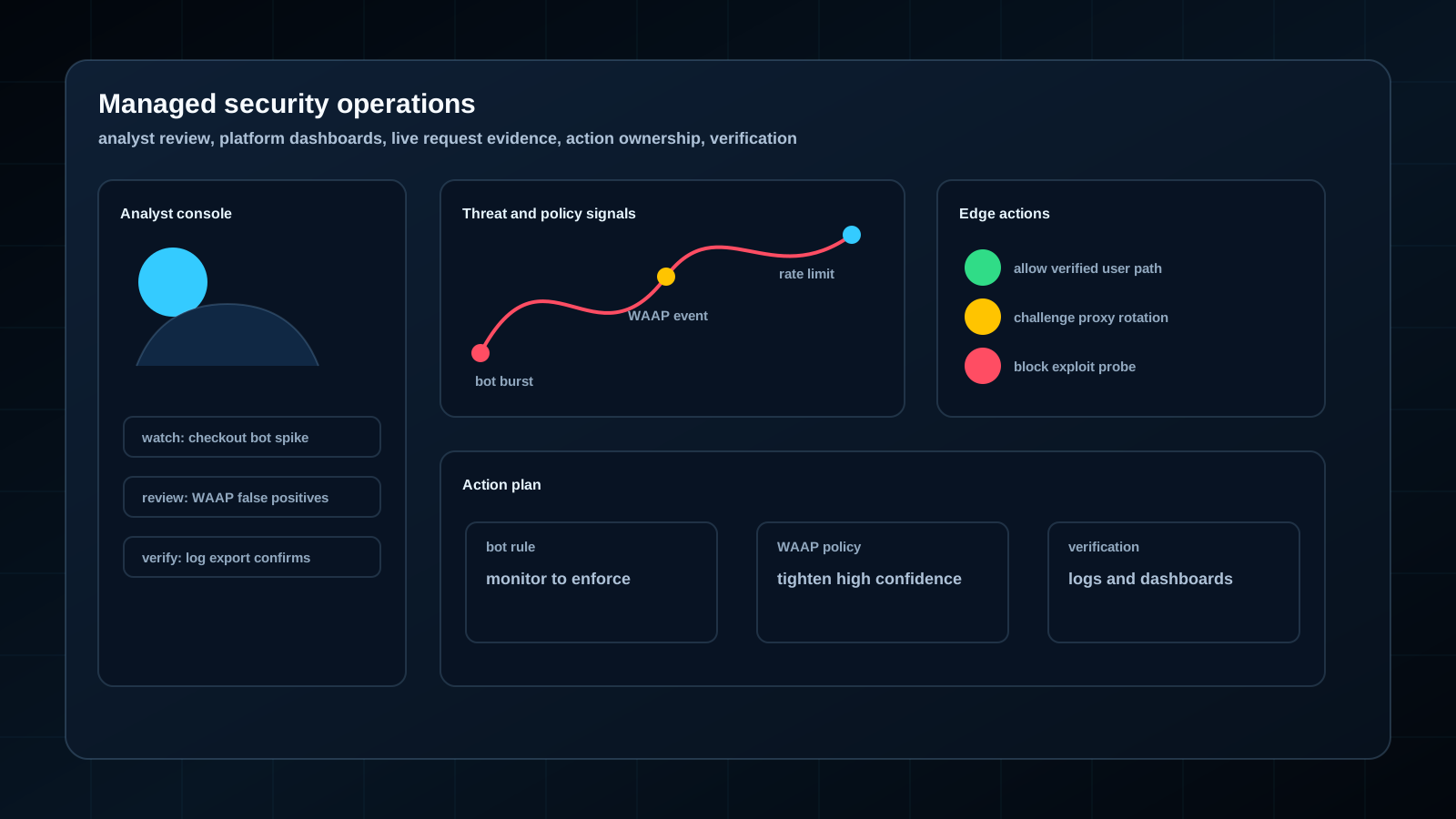
How the Managed Security Workflow Runs
Review Service Evidence
Analysts work from the service review trail: bot fingerprints, WAAP events, rate limit hits, cache results, image delivery, and origin logs.
Recommend Actions
Each finding becomes a concrete control recommendation: tune policy, adjust thresholds, change cache behaviour, enrich logs, or keep watching.
Implement Changes
Peakhour supports the rollout window with owners, test steps, rollback notes, and live checks against observed application traffic.
Follow Up From Results
The next review compares outcomes with the original evidence, then moves rules from monitor to enforce, narrows broad controls, or adds new actions.
The service review keeps security, delivery, and operations in the same workflow: inspect the live evidence, decide the next action, implement the change, then confirm the result before broadening enforcement.
Review Service Evidence
The review starts with dashboards and logs for bot traffic, WAAP events, API exposure, credential-stuffing indicators, suspicious geography, origin errors, cache outcomes, and policy decisions. Findings stay tied to request evidence so the next step is clear.
Recommend Control Actions
Peakhour turns the review into specific recommendations for bot management, WAF and WAAP policy, residential proxy detection, API protections, and false-positive handling. Actions are documented as allow, challenge, rate limit, block, or monitor decisions.
Prepare the Rollout
Rate limits, cache rules, image optimisation, compression, and origin handling are checked before implementation so the plan protects the application without degrading the user path. The rollout includes owners, tests, rollback notes, and monitoring checks.
Implement the Action Plan
The action plan moves through implementation with the same evidence trail: policy changes, deployment owners, test steps, rollback notes, monitoring checks, and post-implementation review criteria.
Follow Up on Live Results
After the change, Peakhour validates the result against live traffic and follows up with adjusted recommendations when logs show a rule is too broad, too weak, or ready to move from monitor to enforce.
Related evidence
Security Operations Improved in Production
Customer examples that connect Peakhour controls to production outcomes.

Stone & Chalk
Fintech Hub Enterprise Security
How Australia's leading fintech hub secured hundreds of startups with enterprise-grade application security, zero-day vulnerability protection, and comprehensive threat management.

National Gallery Australia
Government Security Compliance & Bot Management
How Australia's National Gallery achieved government security compliance with advanced bot management, DDoS protection, and content scraping controls whilst improving digital visitor experience.
Peakhour's managed security approach is proactive, knowledgeable, and comprehensive. Their team anticipates threats and responds swiftly to protect our systems.
Secure your application with evidence-led managed security
Get expert review of your edge, bot, WAAP, rate, cache, image, and log signals, then let Peakhour help implement and verify the highest-impact actions.
Learn More About Managed Security

A Tale Of Two Scoring Systems - The Atlassian Confluence Vulnerabilities
Reviewing the CVSS and EPSS CVE scoring systems in light of the Atlassian Confluence-Aggedon
Read More
A Risk Based Approach To Vulnerability Scoring
An in-depth exploration of EPSS, its data-driven approach to assessing cybersecurity threats, and how it complements CVSS.
Read More
Dive into the CVSS Scores for CVE-2023-22515 and CVE-2023-22518
Understand CVSS by examining the Atlassian CVE-2023-22515 and CVE-2023-22518.
Read More