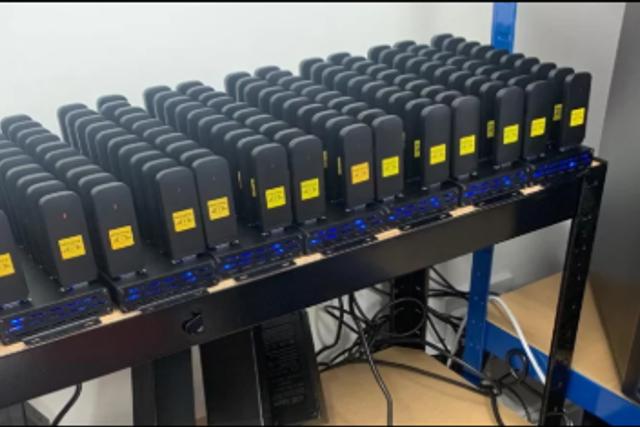

For popular concerts and events, tickets can disappear in seconds. Often the competition is not just other fans, but ticket scalping bots built to buy faster than a human can, then push those tickets into secondary markets at heavily inflated prices. The United States introduced the Better Online Ticket Sales (BOTS) Act to address that conduct. Whether it is working is less clear. Recent investigations into Ticketmaster suggest enforcement is still catching up.
Understanding the BOTS Act
Enacted in 2016, the Better Online Ticket Sales (BOTS) Act is a U.S. federal law aimed at giving consumers a fairer chance when buying tickets online. The law makes it illegal to use software, or "bots," to bypass security measures on ticket-selling websites.
Specifically, the BOTS Act prohibits:
- Circumventing a security measure, access control system, or other technological control used by a ticket issuer to enforce purchasing limits.
- Using a bot to purchase tickets in excess of posted limits.
- Selling tickets that were acquired in violation of these rules, if the seller knew or should have known they were obtained illegally.
The aim was to stop scalpers using automated tools to buy tickets in bulk, so fans had a fairer chance of purchasing tickets at face value.
Australia's Approach
Ticket scalping bots are not only a U.S. problem. Other countries have also used legislation to protect consumers. In Australia, the state of New South Wales (NSW) became the first to outlaw ticket bots in 2017.
The legislation introduced heavy penalties, with fines up to $110,000 for corporations using bots to snap up tickets. The law also went further than the US BOTS Act by capping ticket resale prices at no more than 10% above the original price. At the time, a representative from TEG, the owner of Australia's largest ticket seller Ticketek, stated that bots accounted for up to 70% of activity on their website, showing how widespread the problem had become.
Ticketmaster Under the Microscope
Despite the BOTS Act being in place for years, ticket scalping persists. U.S. regulators have now turned their attention to the platforms themselves. In September 2025, reports emerged that the U.S. Federal Trade Commission (FTC) was investigating whether Ticketmaster, a subsidiary of Live Nation, was doing enough to comply with the BOTS Act.
The probe is reportedly examining whether the ticket seller has a financial incentive to allow resellers to circumvent its own rules. Ticketmaster denies wrongdoing and claims to block hundreds of millions of bots daily, but the investigation raises a direct question: are ticket platforms motivated to eliminate a secondary market from which they can also profit?
If the FTC pursues a case and finds Ticketmaster in violation, the penalties could be substantial. The law allows for fines of up to $53,000 per violation, which could translate to billions of dollars in penalties and put the rest of the industry on notice.
Renewed Political Pressure
Ticket scalping has also drawn direct political attention. In March 2025, President Donald Trump signed an executive order aimed at cracking down on ticket scalpers and price-gouging practices. The order specifically calls on the FTC to increase its enforcement of the BOTS Act, a piece of legislation that, despite being law since 2016, has been used to prosecute offenders only once.
The executive order also pushes for greater price transparency throughout the ticket-buying process and calls for investigations into unfair and anti-competitive practices in the secondary market. This follows similar efforts from the Biden administration, which had focused on eliminating "junk fees" and promoting all-in pricing. The bipartisan pressure points to a growing consensus that the current state of the ticketing industry is failing consumers.
The order received broad support from across the industry, with Live Nation, StubHub, and the National Independent Venue Association (NIVA) all voicing their approval. That support reflects a clear industry position: stronger enforcement of existing laws like the BOTS Act is a necessary step in protecting fans from scalpers.
Fighting on Two Fronts
While regulators are questioning Ticketmaster's efforts, the company has also used legal channels to fight bot operators. A notable case involved Prestige Entertainment, a ticket broker that Ticketmaster accused of using sophisticated bots to buy large quantities of tickets for resale.
In that lawsuit, Ticketmaster alleged that Prestige used bots and dummy accounts to bypass security measures like CAPTCHAs and purchase limits. The case produced some interesting legal arguments, including a novel copyright claim. Ticketmaster argued that in order to develop the bots, the software creators must have illegally copied code from Ticketmaster's website and app.
The legal battle ended in a settlement in 2019, with Prestige Entertainment permanently banned from using bots on Ticketmaster's platforms. The case shows that while Ticketmaster is under scrutiny itself, it has also pursued those who exploit its system. That leaves Ticketmaster fighting on two fronts: against bot operators, and now against regulators questioning whether its own enforcement is strong enough.
An Endless Cat and Mouse Game
The ticketing industry is locked in a constant technical arms race. As platforms like Ticketmaster develop more sophisticated security measures, bot creators find new ways to circumvent them. They use tools like residential proxies to mimic human users and distribute their attacks across thousands of IP addresses, making them difficult to detect.
Ticketmaster states it blocks 200 million bots a day, a fivefold increase from 2019. That figure shows the scale of the problem. The financial incentive for scalpers is large, and they are willing to invest heavily in technology to stay ahead.
For consumers, this means sold-out events and high resale prices are likely to continue. The BOTS Act provides a legal framework to punish offenders, but its effectiveness depends on enforcement and cooperation from major players like Ticketmaster. The current FTC investigation may show how much practical force the law has.