
CDN providers often promote the size of their network, and how many Points of Presence (POPs) they have. Higher capacity, more resilient networks are useful from a security point of view (think DDoS attacks), but more POPs can also work against what the CDN was designed to do: take load off an origin and improve performance for end users.
The POP Problem
Modern CDNs are what's called 'Pull' CDNs. That means the CDN won't store content/resources until a user requests it. The first time a user requests a resource, it goes to the CDN POP, checks its local cache, gets a miss, and then passes the request through to origin. As the resource is returned, the CDN stores a copy for the next time someone wants it. If your CDN has 100 POPs, then this process has to be repeated 100 times to fully 'warm' the CDN for that specific resource. That's 100 requests to origin. The more POPs your CDN has, the more likely you are to get a miss and hit the origin.
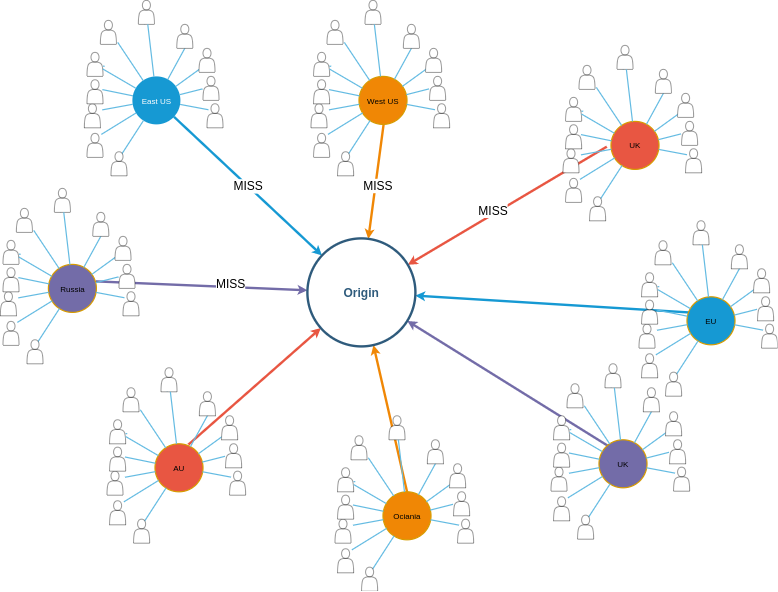
When the caches at POPs are fully populated, the effect on your application can be minimal. During a cache MISS event, typically either due to resource expiration or a manual purge, many requests can be sent to the origin server concurrently while the individual POPs rebuild their caches. The more POPs, the longer the process takes.
This can be a problem, especially when caching dynamic pages that need to be server side rendered, large resources, or transformed resources. For example, take a busy ecommerce store running Magento during a sale, Magento will purge content when sales are made, forcing the cache to rebuild each time. During a busy period it can reduce your cache hit rate and degrade site performance.
Enter Origin Shield
CDN Origin Shield is a feature that lets you nominate the CDN Point of Presence closest to your server as a shield. All requests that hit other POPs and receive a cache miss will then go to the nominated shield before hitting the origin. The shield becomes a 'super cache' and can reduce the amount of requests to your origin in a cache miss.
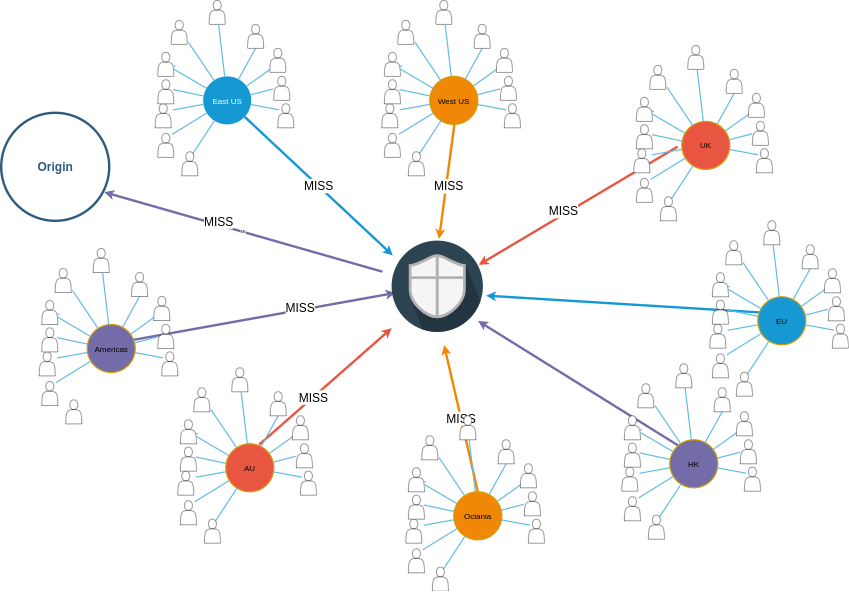
Peakhour.IO implements origin shield as a simple dropdown on an origin pool where you can select the geographic location that should be used as a shield. Requests to your origin are now routed through this geographic location before reaching your origin in a cache miss scenario.
Clients who use multiple geographic origins can also benefit from Origin shield. Peakhour.IO allows the specification of an origin shield per origin. For geographic load balancing, you will need to contact support for setup.
Seeing is believing
The Peakhour.IO summary now includes your edge CHR, your shield CHR and your overall CHR so that you can see the effect in action.
- Some of our clients have seen typical increases of 10-20% of their overall Cache Hit Rate, and greater than 40% when specifically looking at often flushed dynamic content.
- Quicker cache convergence
- Fewer hits to origin
- Better end-user experience
- Higher conversions
Final Thoughts
Origin Shield is an important feature for certain types of site, or when you're looking to maximise your cache hit rate. CMSs that offer built in full page caching, like Magento and Drupal, flush content often, and are susceptible to performance degradation as load increases. Minimising hits to the origin in these cases is vital.
If you are interested in getting more out of your CDN, need a bespoke CDN solution, or need a provider that offers performance, optimisation and security services, reach out to discuss the right setup.
Origin shield with request collapsing helps minimise origin hits, improve CHR and maintain user experience for your web application.