
APIs have mostly been designed for human developers first. Reasoning models like DeepSeek make that assumption weaker. If an agent can inspect an API, plan a sequence of calls, and adapt as it goes, it becomes a different kind of consumer.
That is the part worth paying attention to. Many APIs still assume a human-first model while AI agents become regular, and in some cases primary, users. These are not simple scraping bots or automation scripts. Modern AI agents can plan, reason, and change their behaviour. They interact with APIs in ways many teams did not account for when they wrote their OpenAPI specifications and documentation.
A human developer reads documentation, tries a few calls, and works through errors. An AI agent can process the whole API surface in seconds, generate thousands of possible interaction patterns, and test them systematically. That difference changes both API design and API security.
The issue is not limited to technical specifications. API logs already show traffic patterns that challenge older assumptions. AI agents do not follow typical "business hours" usage. They do not slow down because a workflow becomes cognitively heavy. They process responses at machine speed and chain API calls in ways human developers rarely attempt.
This shift forces us to rethink several core aspects of API design:
Structure and Format
Human-readable formats still matter, but they are not the only target. JSON and REST endpoints work well for developers who need to read and understand responses. For AI agents, there may be room for more efficient formats that optimise for machine processing rather than human comprehension.
Rate Limiting and Quotas
Most rate limiting models still assume human consumption patterns. AI agents operate at machine speed and scale. New models need to account for that processing capacity while still preventing abuse. That may mean moving from simple request counts to complexity-based quotas.
Authentication and Security
Traditional API keys and OAuth flows centre on human developers. AI agents need security models that account for how they operate. The hard problem is verifying the identity and intentions of an AI agent without weakening the security controls around the API.
Documentation and Discovery
API documentation still focuses on human understanding. For AI agents, machine-readable specifications need to go beyond OpenAPI. They should describe what endpoints do, not just how to call them.
This also changes how we monitor and maintain APIs. Traditional metrics like response time and error rates remain useful, but they do not explain AI agent behaviour on their own. How do we measure the "success" of an API when its primary users are machines that can adapt to problems and work around them?
Performance optimisation changes as well. A human developer might tolerate occasional latency. An AI agent can make thousands of calls per second, which puts more pressure on caching, edge computing, and response optimisation.
APIs are likely to split into two parallel tracks: human-oriented interfaces that prioritise developer experience, and machine-oriented interfaces optimised for AI consumption. This is not a choice between one audience and the other. It is recognition that they have different needs.
The challenge extends to business models. How do we price APIs when consumers are AI agents that can process information at machine scale? Traditional per-request pricing may not make sense when an AI can make millions of optimised calls that would take a human developer years to replicate.
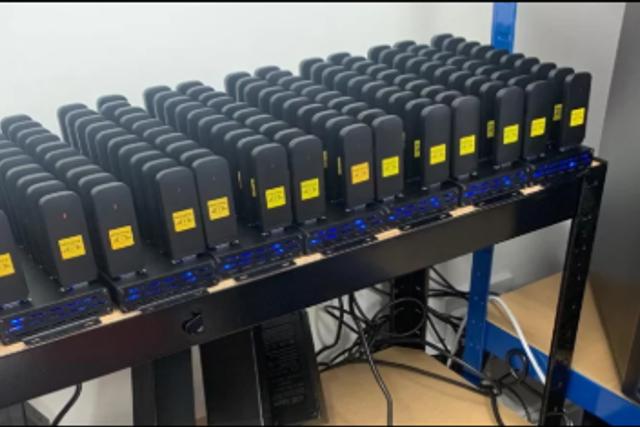
Residential proxies add another layer of complexity. They allow AI agents to appear as regular users, making it harder to distinguish between human and machine traffic. That pushes API access control beyond IP-based rate limiting.
The ethical questions also matter. As APIs become primarily consumed by AI agents, teams need frameworks for responsible use. That includes asking how an API might be used inside AI systems, and what guardrails should sit around that access.
This is not about replacing human developers. It is about recognising AI agents as a new class of API consumer, with their own needs and capabilities. API design, security, and management all need to account for that.
The APIs we build today will sit under tomorrow's AI-driven systems. They need to be designed for both human and AI consumers, with clear decisions about discovery, access, rate limits, authentication, monitoring, and abuse controls.
The shift to AI-first API design is already under way. The practical question is how quickly API practices can catch up.
Our APIs have to evolve with their users.