
Visa's Security Roadmap 2025-2028 for Australia is not just a payments strategy document. It is a signal about where fraud, application security, authentication, and compliance work are converging for merchants, acquirers, issuers, gateways, and service providers.
The timing matters. Visa's roadmap cites Australian card fraud rising 32% to A$762 million in 2023, with unauthorised card-not-present fraud increasing 33% to A$688 million. Scam losses reached A$2.7 billion in 2023, and reported data breaches increased 19% in the second half of 2023 compared with the first half. The pressure is not coming from one direction. Payment teams are dealing with automation abuse, social engineering, compromised credentials, weak merchant onboarding, third-party exposure, and new payment experiences at the same time.
Visa groups its roadmap into six focus areas: preventing enumeration attacks, continued investment in secure technologies, data-driven risk, resilience against fraud and scams in the era of AI, stronger cyber security posture, and secure digital payment experiences. For Australian businesses, the more useful way to read it is as a set of operational themes.
Automation Abuse Has Become a Payment Control Issue
Enumeration attacks sit first in the roadmap for a reason. Visa defines enumeration and account testing as automation used to test and guess payment credentials that can later be used in fraudulent transactions. The attacks often appear as high-speed card testing against online merchants, with low-value attempts used to validate PAN, expiry, or CVV2 combinations.
Visa reports a 40% increase in enumeration attacks in the first six months of 2023 compared with the previous period, and more than US$1.1 billion in global fraud losses from enumeration attacks over the year to 30 September 2023. The updated Visa Acquirer Monitoring Program (VAMP), effective 1 April 2025, adds enumeration criteria alongside broader fraud and dispute monitoring.
The implication is practical: merchants and acquirers need route-level evidence, anomaly monitoring, velocity controls, and a way to identify distributed automation before it becomes payment fraud. IP-only controls are weak when attacks use residential proxies, first-seen devices, and slow distributed attempts. Peakhour's bot management, residential proxy detection, advanced rate limiting, and edge logging can help support that evidence path, but the business still needs payment-flow ownership and acquirer alignment.
Authentication and Tokenisation Are Moving Together
Visa's secure technology theme is not simply "add more authentication." The roadmap ties tokenisation, EMV 3DS, biometric or in-app authentication, passkeys, and Click to Pay into the same customer and fraud problem: protect credentials while reducing unnecessary friction.
Tokenisation reduces the value of exposed card data by replacing a card number with a token. Visa notes that the Visa Token Service has passed one billion tokens in Asia Pacific and that merchants adopting VTS for digital payments saw payment fraud rates reduced by more than half in the cited Asia Pacific analysis. But the roadmap also flags token provisioning fraud, where bad actors illegitimately provision tokens and then monetise them quickly.
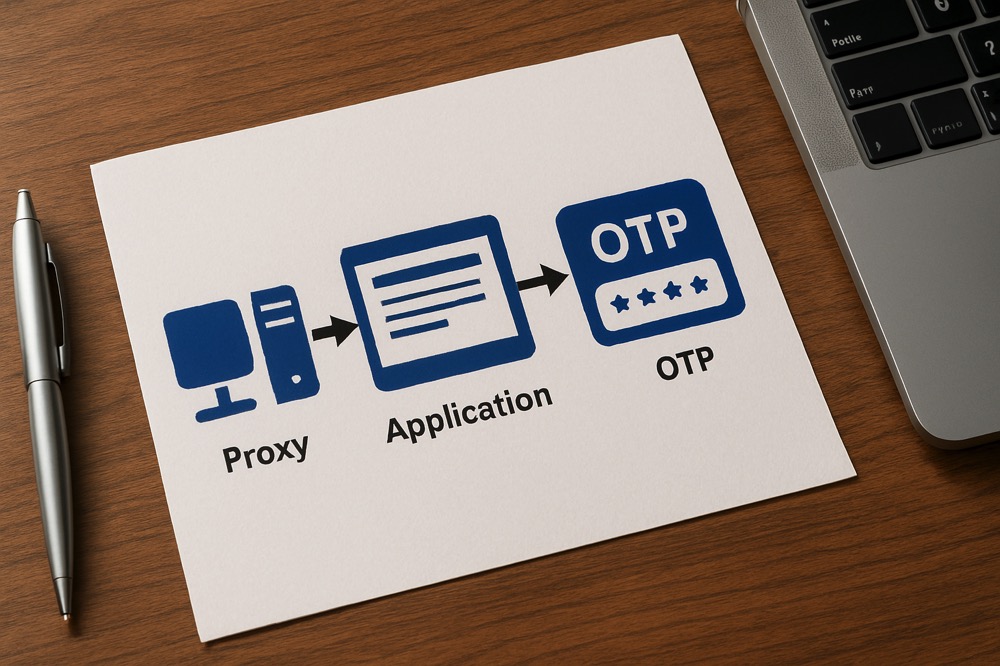
That is why authentication quality matters. Visa says issuers are being mandated to move away from SMS OTP as the sole authentication factor by 2026, toward methods such as biometric, in-app, app-to-app, or passkey-based authentication. For merchants, updated Visa Secure minimum data requirements push more complete authentication data into the decision process.
For application teams, the lesson is that checkout security is not a single login prompt. It includes account creation, saved-card use, card add, token provisioning, checkout, refund, and support paths. A risk-based challenge should appear where the action justifies it, not everywhere by default.
Risk Decisions Need Better Data, Not Just More Data
The roadmap's data-driven risk theme is about using available payment and authentication data to reduce fraud and false positives. Visa points to EMV 3DS data elements, Visa Secure requirements, risk-based authentication, and issuer decisioning as examples of how better data quality can change outcomes.
More data is not automatically better. It has to be accurate, relevant, protected, and available at the moment of decision. A fraud team may need account history, device consistency, proxy likelihood, card-attempt cadence, transaction context, and previous response outcomes. A compliance team may need to know why that data is collected, where it is retained, and who can query it.
This is where contextual security becomes useful. Peakhour's Contextual Security approach combines request, route, account, network, device, and behaviour signals so teams can allow, challenge, rate limit, block, or log based on risk. The control is strongest when the decision record stays attached to the event: signal set, policy version, action, and outcome.
AI Raises Scam and Fraud Pressure, But It Is Also Part of Detection
Visa frames AI in both directions. Generative AI lowers the barrier for phishing, social engineering, deepfakes, and personalised scam content. At the same time, Visa points to its long history using AI and machine learning in payment fraud detection, including around 150 AI and machine learning models in production.
For businesses outside the payment network, the message is not "buy AI." It is to prepare for more scalable deception and faster abuse cycles. Fraud controls need to watch for account creation abuse, credential stuffing, payment testing, suspicious onboarding, transaction anomalies, and customer manipulation signals. Human review still matters because authorised scams can look different from unauthorised account compromise.
Peakhour's role is strongest around the request and account edge: identifying automation, proxy-backed traffic, route abuse, credential risk, and abnormal behaviour before fraud reaches sensitive application paths. Those signals can feed fraud review and incident response, but they should be used with privacy, false-positive, and customer-impact controls.
Cyber Posture Is Now Part of Payment Ecosystem Resilience
Visa's fifth theme connects payment fraud to cyber security posture. PCI DSS remains mandatory for entities storing, processing, or transmitting Visa cardholder data. Visa also highlights third-party agent (TPA) registration, its Account Information Security program, third-party service provider risk, breach trends, and preparation for broader AES support by 2030.
For Australian businesses, this is a reminder that payment risk is not limited to the payment processor. A breach of a CMS account, a third-party script, a weak checkout plugin, a vulnerable API, a compromised support tool, or an unmanaged service provider can affect the payment environment. PCI scope and third-party oversight need to include the systems that can change or observe checkout, not only systems that store card numbers.
Peakhour can help with application-layer controls around WAF, API protection, bot management, rate limiting, DDoS mitigation, and log forwarding. Those controls can support evidence for payment security and cyber posture. They do not replace PCI DSS validation, TPA obligations, acquirer requirements, or legal review.
New Payment Experiences Need Security Built Into the Flow
Visa's final theme covers digital payment experiences such as Click to Pay, passkeys, Flex Credential, and Tap to Everything. These changes are about reducing manual card entry, password dependence, and fragmented checkout experiences while preserving cardholder verification and transaction security.
The security work for merchants is to keep pace with those flows. New payment methods bring new integration paths, data elements, redirects, APIs, support workflows, and customer education needs. The right question is not only "does the new payment method work?" It is "which systems can affect it, what data is passed, how is the customer verified, what fraud signals are available, and what evidence remains after a dispute or incident?"
What Businesses Should Do Next
Read the roadmap as an operating agenda. Map payment and account routes. Identify where automation can test credentials or cards. Review SMS OTP dependence. Check whether tokenisation and 3DS data are being used well. Validate which vendors affect checkout and payment security. Confirm that logs can support fraud review without capturing sensitive card data. Tune rate limits and bot controls by route, not only by IP.
The next few years of payment security will reward teams that can make proportionate, evidence-backed decisions. That is the thread running through Visa's roadmap and through Peakhour's edge security work: see the request in context, choose the right action, and keep enough evidence for fraud, security, and compliance teams to explain what happened.