Credential Stuffing Through “Clean” Residential IPs
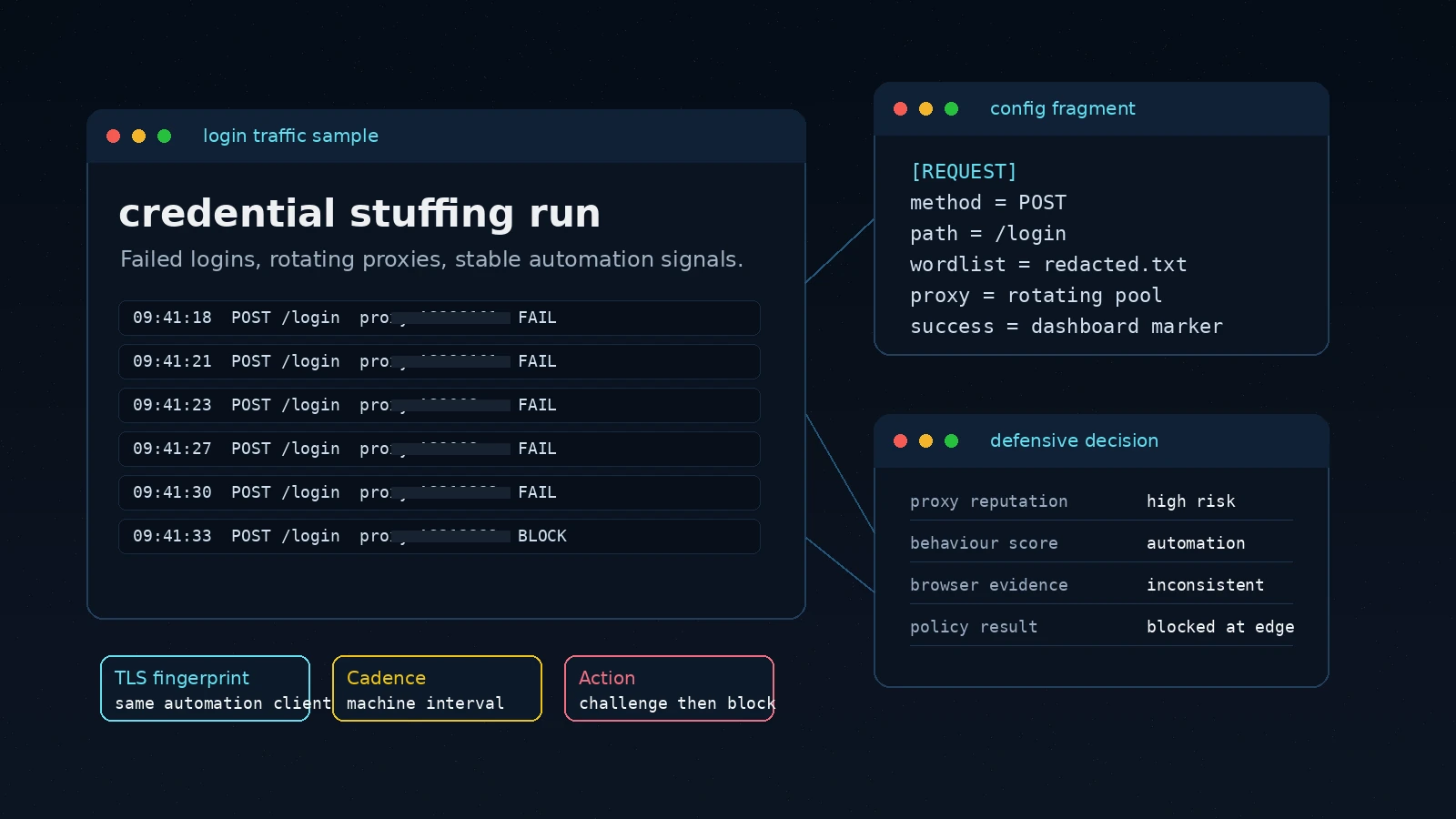
A residential IP with no bad reputation can still carry a credential-stuffing attempt. Defend the login workflow by joining credential, route, client, and outcome evidence.
Tag
Related Peakhour notes, analysis, and field guidance.
A residential IP with no bad reputation can still carry a credential-stuffing attempt. Defend the login workflow by joining credential, route, client, and outcome evidence.
Residential proxy capacity can come from bandwidth-sharing apps, monetisation SDKs, compromised servers, and pre-infected consumer devices. Here is why consent and a residential IP are not enough to establish trust.
Breached credentials keep creating cost after the original breach. They feed credential stuffing, account takeover, fraud, support, and reputation costs across login, recovery, checkout, and API flows.
Credential stuffing risk continues after a password works. Account protection needs to watch password reset, email change, stored payment, gift card, and checkout flows.
Understand the shift from scripted bots to reasoning AI agents and how to adapt your security strategy for this new reality.
A deep dive into how credential stuffing attacks work, the tools used, and how to build a multi-layered defense.
Residential proxies change the network path while anti-detect browsers change the client presentation. Detection works by finding inconsistencies across the request, not by treating either signal as identity.
Explore why traditional CAPTCHAs are failing both users and security, and discover modern, invisible alternatives.
With nearly half of all internet traffic being automated, a robust bot management strategy is essential. This article explores the key considerations for effective bot detection, classification, and response in the face of evolving threats.
Bots are part of account takeover, fraud, scraping, and other abuse. Identity and access management leaders need a clear business case for bot management, or their organisations face avoidable account takeover losses and will be less prepared for the risks introduced when customers use AI agents.
Analysis of attempts to exploit a recent Share Point zero day vulnerability reveal network fingerprinting and classification is a robust defense.
SMS pumping turns verification endpoints into billable traffic. Trace the delivery chain, measure abnormal sends and stop expensive requests before the provider charge lands.
The proliferation of residential proxy networks has undermined traditional IP-based security, enabling attackers to bypass protection measures while appearing as legitimate users.
How Peakhour's contextual security aligns with Visa's data-driven risk management approach in the 2025-2028 Security Roadmap.
How open reasoning models transform automation from rigid scripts to autonomous agents, fundamentally changing our approach to security and digital interactions.
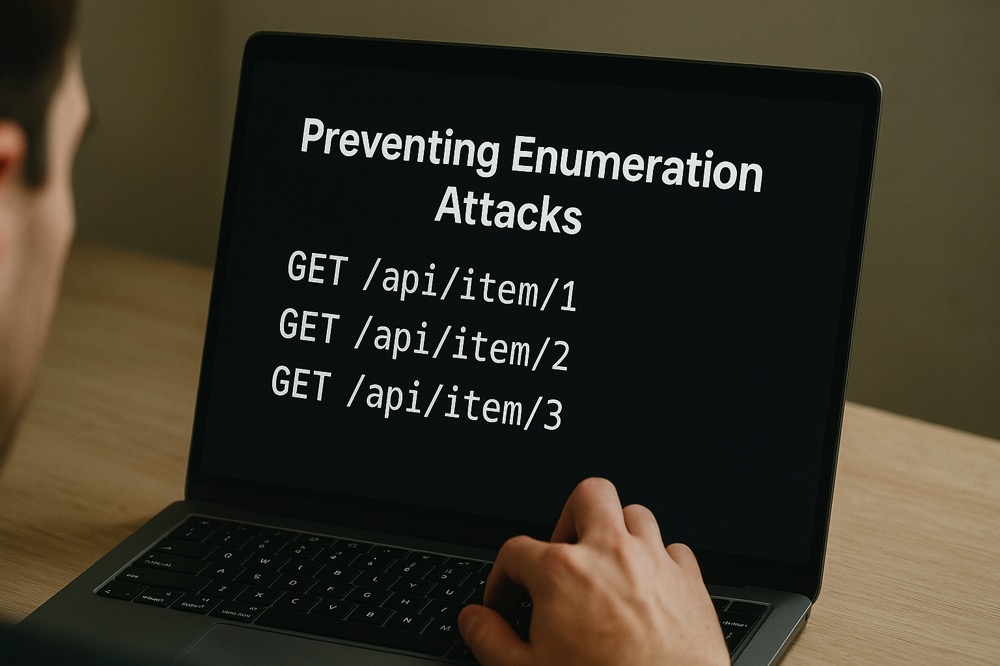
An analysis of how Peakhour's solutions help prevent enumeration attacks, aligning with Visa's Security Roadmap 2025-2028 priorities.
An analysis of Visa's Security Roadmap 2025-2028 and how Peakhour's solutions help Australian businesses meet these security objectives.
Understand the impact of bot traffic on A/B testing results and learn how to protect your optimization efforts
Click fraud drains marketing budgets and corrupts campaign data. Learn how bots and residential proxies impact your ad spend and marketing strategy.
Learn how distributed bot networks using residential IPs are evolving to evade traditional fraud detection
Your anti fraud IP Intelligence service is no longer fit for purpose. Learn about the challenges in detecting residential proxies and why traditional methods don't work.
Comprehensive guide to enterprise bot management for modern application security platforms. Learn how to protect applications and APIs from sophisticated bot threats including anti-detect browsers, credential stuffing, and automated attacks targeting DevOps environments.
Comprehensive analysis of credential stuffing threats against Australian financial institutions and how application security platforms help meet CPS 234 disclosure requirements whilst preventing account takeover attacks.
An in-depth look at the growing threat of credential stuffing attacks on Australian businesses, including recent case studies, defense challenges, and practical recommendations.
Examine why current security solutions fail to detect and mitigate threats from residential proxies, and the need for comprehensive protection strategies.
Explore the complexities of residential proxy detection and its impact on organisational risk, with a focus on quantifying the threat and reframing security approaches.
Explore strategies to enhance web application security without compromising user experience, focusing on contextual security and adaptive authentication measures.
Explore how credential stuffing attacks and account takeovers affect business reputation and customer trust.
Our 2024 survey of Australian CISOs and CTOs looks at how businesses are approaching account protection, particularly credential stuffing and residential proxies.
Survey data from Australian CISOs and CTOs shows broad MFA adoption, lower bot protection uptake, and early attention on residential proxy detection for credential stuffing and account takeover risk.
MFA helps, but it does not stop social engineering, residential proxy abuse, credential stuffing, or session risk on its own.
How breached credential checks and risk signals help detect credential stuffing without adding unnecessary login friction.
Popular Australian fashion website TheIconic recently suffered reputational damage from fraudsters placing orders after an account takeover. Learn how this happens and what you can do to stop it.
Comprehensive guide to HTTP security headers for protecting web applications from client-side attacks. Learn essential browser security configurations for modern application security platforms and DevSecOps workflows.
Understand CVSS by examining the Atlassian CVE-2023-22515 and CVE-2023-22518.
An in-depth exploration of EPSS, its data-driven approach to assessing cybersecurity threats, and how it complements CVSS.
Reviewing the CVSS an EPSS CVE scoring systems in light of the Atlassian Confluence-Aggedon
How OpenBullet packages browser and HTTP automation for credential attacks, and which signals defenders can use without treating any one fingerprint as proof.
Residential proxy malware, and its implications for traditional cybersecurity measures, emphasising the need for evolving threat detection and mitigation strategies.
A practical entry point to residential proxy supply, detection, policy and current research for security and fraud teams.
Peakhour clients are protected against CVF-2022-26134 Atlassian Confluence RCE
Comprehensive guide to enterprise bot management and advanced countermeasures for protecting applications against sophisticated malicious bot threats. Learn proven strategies for bot detection, mitigation, and automated defence systems.
Comprehensive analysis of malicious bot threats targeting modern applications and APIs. Learn how enterprise bot management protects against automated attacks, credential stuffing, price scraping, and sophisticated bot-driven financial damage.
© PEAKHOUR.IO PTY LTD 2026 ABN 76 619 930 826 All rights reserved.