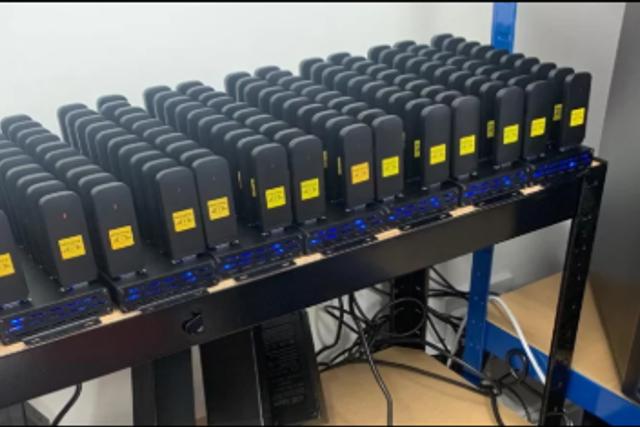

Anti-detect browsers matter to defenders because they attack the assumptions behind browser trust. Many bot and fraud controls look for consistency between the browser, network, session, and behaviour. Anti-detect tooling is designed to make automated or repeated activity look more like separate ordinary browser sessions.
This article is not a guide to using those tools. The defensive question is simpler: when a browser tries to look ordinary, what can still be observed safely, and how should that evidence affect a request decision?
Why They Create Risk
Anti-detect browsers are often discussed as a browser-fingerprinting problem, but the risk is wider than that. The same traffic may also involve residential proxies, credential lists, automation, and API requests that never run browser-side checks. A login attempt, account creation flow, product scrape, checkout request, or mobile API call may look valid at the protocol level while still being part of an automated campaign.
The hard part is that some signals are genuinely ambiguous. A changed browser, a new device, a shared network, or a privacy tool does not prove abuse. A defensive system has to treat those observations as risk inputs, not as standalone verdicts.
Browser Consistency Is Evidence, Not Identity
Anti-detect tooling tries to make browser-reported attributes look internally consistent. That weakens simple checks that only ask whether the browser appears plausible. Defenders need a broader view: does the claimed browser line up with the network stack, TLS and HTTP behaviour, session history, cookie continuity, route sequence, response-code pattern, and recent account behaviour?
That does not mean a fingerprint identifies a person. Fingerprints classify software, client behaviour, and connection characteristics. They can help separate likely automation from ordinary traffic, but they need to be combined with route, account, proxy, and behavioural context. The result should be a risk classification with evidence attached, not an unexplained block.
Residential Proxies Change the Decision
Residential proxies are a common companion signal because they make requests appear to come from consumer networks. That creates a false-positive problem. Real customers also use shared residential, mobile, office, carrier-grade NAT, and public Wi-Fi networks. Blocking every suspicious or shared source would damage legitimate traffic.
The safer approach is to use residential proxy detection as one input in the decision. A proxy signal on a public content page may be logged. The same signal on repeated login failures, account creation, checkout abuse, or sensitive APIs may justify a challenge, rate limit, or block. Context changes the action.
The API Gap
Browser-side checks are weakest where the browser is not present. Mobile apps, partner integrations, token routes, and direct API clients may not expose the same JavaScript or browser evidence that a web page does. Attackers do not need a convincing browser if the target workflow accepts valid-looking API requests.
That is why anti-detect risk belongs in the wider application security model. API routes need method, schema, authentication, token, request cadence, response-code, account, and bot context. If the only signal available is an IP address, the decision will be too blunt.
Observable Signals Defenders Can Use
The useful evidence is usually the mismatch between what the request claims to be and how it behaves over time. A browser may look plausible on one request, but the wider pattern can still show automation: repeated attempts across accounts, route sequences that normal users do not follow, cache-miss pressure on expensive pages, unusual response-code loops, or browser and network characteristics that drift in ways ordinary clients rarely do.
Bot Management works best when it combines these signals rather than chasing a single magic detector. IP intelligence, proxy classification, network and browser fingerprints, route-aware rates, API state, WAF findings, and behaviour should all feed the same action vocabulary: allow, challenge, rate limit, block, log, or review.
Safer Defensive Response
The defensive response should be proportionate. High-confidence exploit traffic can be blocked quickly. Uncertain browser or proxy evidence may be better challenged, rate limited, or logged until the pattern is clearer. Sensitive routes should have tighter policy than public content. Account-impacting actions should preserve enough evidence for review.
This is especially important for support teams. If a real customer is challenged or blocked, operators need to see which signal drove the action and which route was involved. Without that record, anti-bot policy becomes a black box.
Final Thoughts
Anti-detect browsers are a practical problem because they reduce the value of simple browser checks. They do not make traffic invisible. They leave request-path evidence in network behaviour, route sequences, account activity, API usage, proxy signals, and response patterns.
The right goal is not to identify a person from a fingerprint or to block every unusual browser. The goal is to classify risk with enough context to choose a safe action at the edge, then keep the evidence available for tuning and review.