
Remember the distorted, wavy letters you had to decipher to prove you were not a robot? That was CAPTCHA, which stands for "Completely Automated Public Turing test to tell Computers and Humans Apart." First developed in the early 2000s, its purpose was simple: create a challenge that humans could solve, but automated scripts, or bots, would struggle with.
For years, CAPTCHA was used across common web actions, from creating an account to posting a comment. But bots have improved faster than the test, while users have become less tolerant of friction. CAPTCHA now often fails in both directions: it interrupts legitimate users and can still be solved by automated campaigns.
The User Experience Problem: Killing Conversions
The biggest issue with visible CAPTCHAs is the friction they add to the user journey. Customers expect checkout, login, and form flows to be quick. Asking them to stop and solve a puzzle creates a clear point for abandonment.
The data is hard to ignore:
- A landmark Stanford University study found that adding a CAPTCHA can reduce form conversions by up to 40%.
- Research from bot management firm HUMAN Security revealed that 40% of real shoppers have abandoned a purchase because of CAPTCHA frustration.
- Other analyses have shown that simply adding a CAPTCHA can lead to a 3.2% higher bounce rate and an overall 3-5% drop in conversions.
For an e-commerce business, losing up to 40% of potential sales at the final checkout step is not a marginal UX issue. These numbers map directly to revenue from legitimate customers who were annoyed, delayed, or unable to solve the puzzle. The impact is even worse for users with disabilities, for whom many visual CAPTCHAs are nearly impossible to complete.
The Security Problem: A Speed Bump for Bots
While CAPTCHAs frustrate legitimate users, they are often only a small obstacle for modern bots. A market exists for bypassing them at scale.
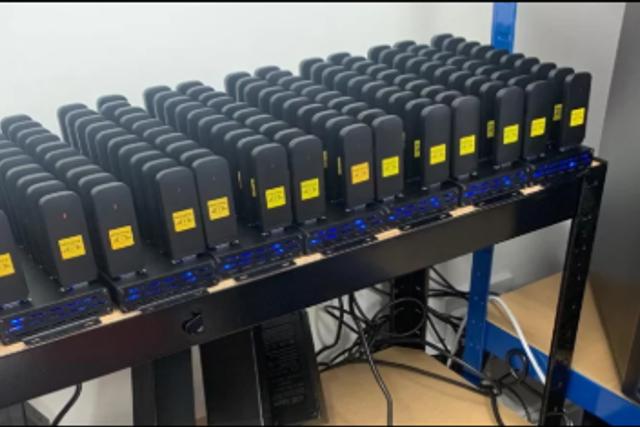
Attackers now use automated CAPTCHA-solving services, often called "CAPTCHA farms." These services use a combination of machine learning algorithms and low-wage human workers to solve CAPTCHAs in real time for a fraction of a cent per puzzle.
An attacker using an automation tool like OpenBullet can integrate with these services via a simple API call. When the bot encounters a CAPTCHA, it sends the puzzle to the solving service and receives the solution seconds later. In many cases, these services have a higher success rate at solving CAPTCHAs than actual humans.
That breaks the original CAPTCHA model. The test designed to block bots can now create a false sense of security while actively harming the experience for real users.
The Modern Alternative: Invisible Challenges
If visible CAPTCHAs are broken, what's the alternative? Modern bot management uses invisible challenges to verify users without causing friction. Instead of actively testing the user, these systems analyse background data to distinguish humans from bots.
This is achieved through a multi-layered approach:
- Behavioural Analysis: These systems track subtle indicators of human behaviour, like mouse movements, typing cadence, and touchscreen interactions. Bots, even sophisticated ones, struggle to mimic these patterns consistently.
- Network and Browser Fingerprinting: By analysing hundreds of data points from the browser and network connection, these systems can identify the tell-tale signs of automation, such as the use of data centre IPs, proxy networks, or inconsistencies in the browser fingerprint.
- Machine Learning: Machine learning models are trained on vast datasets of human and bot traffic. They can identify complex patterns and adapt in real time to new and evolving bot techniques.
With this approach, most legitimate users never see a challenge at all. Their journey remains uninterrupted. Only when the system detects highly suspicious activity is a challenge presented, so security controls are applied where the risk justifies the friction. For sites that depend on checkout completion, account protection, or lead capture, that is a better trade-off than showing every user another puzzle.