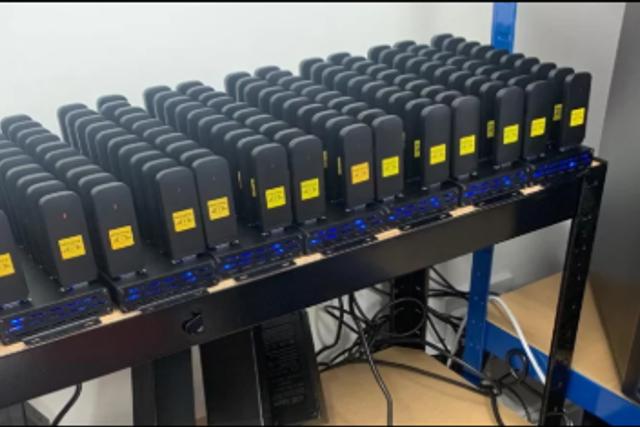

Camaro Dragon, a Chinese state-sponsored group, has developed a custom firmware implant for TP-Link routers. Once installed, it can turn compromised routers into residential proxies. That weakens traditional cyber-defences, including GeoIP blocking, because traffic can appear to come from ordinary local connections. This article looks at how the malware works, why residential proxies matter for enterprise security, and where GeoIP security measures fall short.
Understanding the New Malware
Check Point's research describes Camaro Dragon's sophisticated attacks on European foreign affairs entities. The group uses a custom firmware implant, known as 'Horse Shell', designed specifically for TP-Link routers. The malware includes a backdoor that grants the attackers continuous access to compromised networks and allows them to build anonymous infrastructure.
'Horse Shell' can execute arbitrary commands on the infected router, transfer files, and relay communications using SOCKS tunnelling. Its design can be adapted to different vendors' firmware, suggesting the possibility of a wider spread.
The People and Intentions Behind The Malware
Check Point Research attributes the activity to a Chinese state-sponsored group it tracks as Camaro Dragon. The campaign has significant overlaps with activity publicly associated with Mustang Panda, including shared infrastructure and tooling. Check Point was careful not to describe the two labels as an exact match. That distinction matters when a technical finding is used for threat attribution.
The primary function of 'Horse Shell' is to relay traffic between an infected device and the attackers' command and control servers. This method obscures the true source and destination of the communication, making it difficult to trace back to the attackers.
Importantly, Mustang Panda appears to choose router implant targets indiscriminately. The infection of a home router doesn't imply that the homeowner is a direct target. Instead, each infected router becomes a node in a broader chain that connects main infections with command and control operations.
Researchers identified this approach when they found the 'Horse Shell' implant during an investigation of targeted attacks against European foreign affairs entities. The implant allows the attackers to maintain ongoing access, establish anonymous infrastructure, and move laterally within compromised networks.
The Implications of Residential Proxies
Residential proxies serve as intermediaries, using real IP addresses issued by Internet Service Providers (ISPs). They are used across a range of applications, including business web scraping and anonymising user online activity.
Residential proxy infrastructure becomes more serious when malware such as 'Horse Shell' is involved. The implant turns a compromised router into a relay that can carry an operator's traffic. Check Point demonstrated command execution, file transfer and SOCKS tunnelling. Its report did not attribute credential stuffing, data breaches or DDoS attacks to this implant.
Most importantly, this use of residential IP space can make an attack look as if it originates from a domestic source within the target's location. That undermines traditional cyber-defences.
GeoIP Security Measures and Their Limitations
GeoIP blocking, a traditional cyber security tool, works by limiting access from specific geographical regions or networks frequently associated with cyber threats. However, this method is becoming less effective against the rising use of residential proxies.
Residential proxies can disguise the actual origin of a cyber attack, giving the illusion that it's originating from a trusted, usually local, location. This capability allows them to effectively bypass GeoIP blocking measures. Consequently, malicious actors using residential proxies can carry out their activities with less obvious attribution and often go undetected.
The key operational issue is the exploitation of home routers by malware like 'Horse Shell,' which turns these devices into unwitting participants in cyber attacks. This manipulation means an attack could appear to originate from a seemingly trusted domestic source, which can render GeoIP blocking ineffective.
This threat shows why cyber security needs a more layered approach. Sole reliance on GeoIP blocking is no longer enough. As malware evolves to exploit residential proxies, detection and defence strategies need to adapt. Specifically, it's important to recognise that relying solely on GeoIP blocking, or trusting apparently local connections and deny-listing countries like Russia and China, can create a false sense of security.
Detecting Residential Proxies: The Role of Network Fingerprinting
The rise of residential proxy malware makes network fingerprinting important for identifying these threats. Five techniques can help detect residential proxies:
-
TCP Fingerprinting: Proxied requests may generate TCP fingerprints that don't match the expected device type. For example, a request from a residential IP address that bears the fingerprint of a server OS could be a strong signal of a proxy.
-
TLS and HTTP/2 Signatures: As with TCP fingerprints, unusual TLS and HTTP/2 signatures could reveal proxies. An incoming request using a version of TLS or HTTP/2 not commonly used in residential networks might indicate a proxy.
-
JavaScript-based Fingerprinting: This method identifies the specific browser in use. Discrepancies in JavaScript fingerprints, or the absence of a fingerprint, could suggest the presence of a residential proxy.
-
Timing Analysis: The timing of requests can also be a signal. Proxied requests might exhibit longer or inconsistent intervals between requests, indicating a residential proxy.
-
Behaviour and route context: At the application, the strongest decision comes from combining proxy evidence with the route, account state, request sequence and recent outcomes. Scanning the public exit for an open proxy port does not reliably detect an outbound tunnel established by a compromised router.
While residential proxies have legitimate uses, such as web scraping, those applications sit beside a more serious risk: compromised trusted or local networks can be turned into proxy infrastructure at scale. Cyber threats like 'Horse Shell' use residential proxies to undermine traditional GeoIP security measures, which means defence strategies need to keep evolving.
In Part 1 of our series on residential proxies, we provide an overview of this topic and why it matters to security teams. From basic uses to their role in complicated cyber attacks, we cover the key points.
Learn how Peakhour's Application Security Platform protects against account takeovers and credential stuffing. Contact our team to secure your user accounts.
-
Cohen, I., Madej, R., & Threat Intelligence Team (2023). The Dragon Who Sold His Camaro: Analyzing Custom Router Implant. Check Point Research. Retrieved from https://research.checkpoint.com/2023/the-dragon-who-sold-his-camaro-analyzing-custom-router-implant/ ↩
-
Goodin, D. (2023, May 17). Malware turns home routers into proxies for Chinese state-sponsored hackers. Ars Technica. Retrieved from https://arstechnica.com/information-technology/2023/05/malware-turns-home-routers-into-proxies-for-chinese-state-sponsored-hackers/ ↩