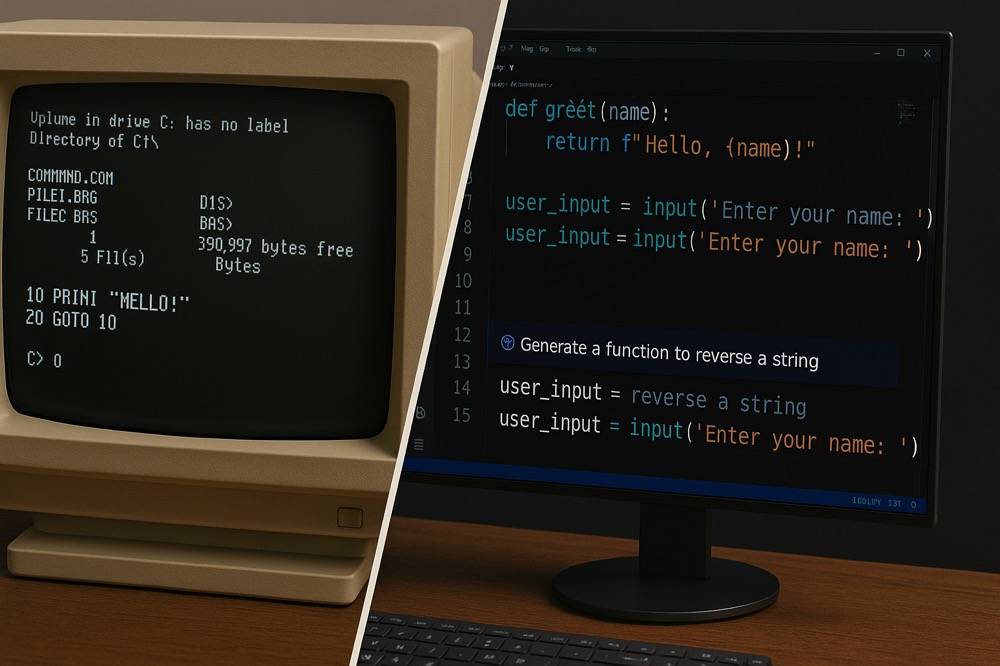

In my last post, I talked about my journey from typing format c: on an old DOS machine to collaborating with AI. The part I keep coming back to still feels slightly unreal: turning academic research papers directly into working code.
For years, the hard part was the distance between academia and industry. A good idea could be locked inside a dense, equation-heavy paper, and turning it into a practical tool could take a team of specialists weeks or months. You had to understand the mathematics, translate it into logic, write the code, and then debug all the places where the theory met the real world.
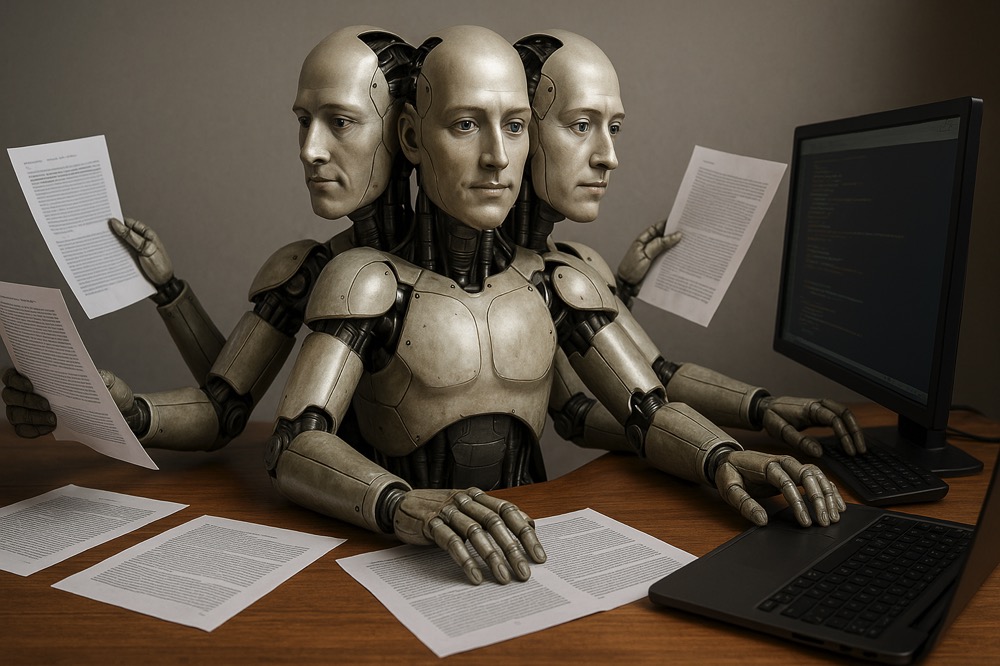
Now my process looks completely different. I'll find an interesting paper, give it to an AI like Gemini, and say, "code this for me". It is a conversation, not just a command. We go back and forth, clarifying ambiguities in the paper and refining the implementation. What used to take weeks of painstaking effort can now be prototyped in an afternoon.
Here are a few examples from my own experiments.
Anomaly Detection
I recently came across a paper detailing a new statistical method for detecting anomalies in time-series data. In the past, I would have spent days just trying to get comfortable with the mathematical models before writing a single line of code. This time, I fed the PDF to the AI. Within minutes, it had parsed the document and produced a Python implementation of the core algorithm. It was not perfect on the first go, but it was a solid, working foundation that we could test and refine together. The AI handled the heavy lifting of translation, leaving me to focus on validating and applying the model.
Customer Journey Mapping
Another area I have been looking at is using data to understand customer behaviour. There are academic papers that model how users interact with a website or product, mapping out their journey from discovery to purchase. Implementing these models used to be a serious undertaking. Now, I can give the AI a paper on a new journey mapping technique, and it can generate the code to analyse server logs or user event data and produce the kind of insights the paper describes. That makes it much easier to experiment with new ways of understanding our customers.
Building Small Language Models
This is where it gets really interesting. We can use large language models (LLMs) to help build smaller, more specialised ones. I've been experimenting with research papers that propose new, efficient LLM architectures. I can give one of these papers to a large AI and have it help me write the code for the smaller architecture. There is a beautiful irony in using a massive AI to help create its smaller, more nimble cousins. It speeds up the cycle of innovation inside the AI field itself.
For me, the important change is the shorter loop between reading an idea, testing it, and getting it into use. The friction between a theoretical concept and a working prototype has been reduced almost to zero. That means I can explore more ideas, take more risks, and bring those research ideas into real use much faster than before.