
My path into technology started with a beige box and no plan beyond seeing what it would do.
When I was a kid, I got an old 8086 computer. The only thing it came with was a thick manual for 'DOS', its operating system. For a child trying to make sense of it, the blinking C:\> prompt was not exactly welcoming. What was I meant to do with it?
I tried typing whatever came to mind, but most of it ended in errors. Then I stumbled on a command that actually did something interesting: format c:. After I typed 'Y' to confirm, the screen would fill with text, showing me its progress. I didn't realise I was wiping the computer's entire memory. I only knew the machine was finally responding.
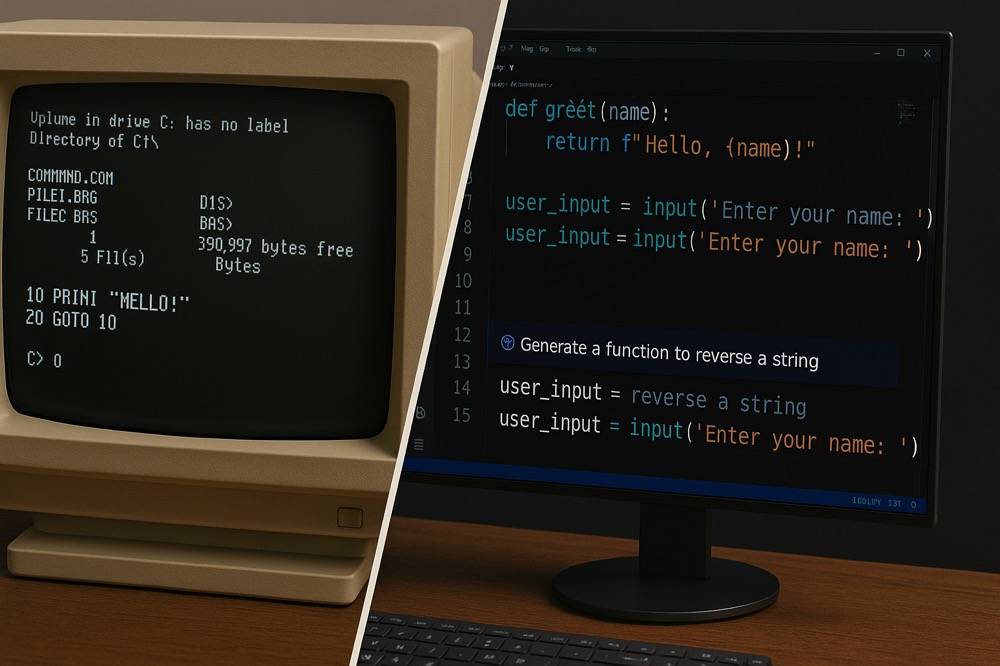
Things properly opened up when I found a book filled with GW-BASIC programs. I wasn't just using a computer anymore; I was telling it what to do. I spent ages carefully typing out code, one line at a time. 10 PRINT "HELLO THERE", 20 GOTO 10. It was slow work, but there was something hard to beat about bringing a program to life with my own hands.
My skills moved along when QuickBasic started coming with MS-DOS. The tools were better, the language was more powerful, and I started building my own little games and applications, learning how to organise my ideas into code.
Every programmer eventually hits a wall. For me, it was a 64-kilobyte limit on a single variable. It sounds tiny now, but it blocked a project I cared about. The only way forward was to learn C, a much more complex language. It was a hard jump, but it was the way to build bigger and more powerful software.
That arc is why today's tools feel so strange to me.
For most of my career, my job was to translate human ideas into instructions a computer could follow. I had to think like a machine, breaking everything down into small, logical steps.
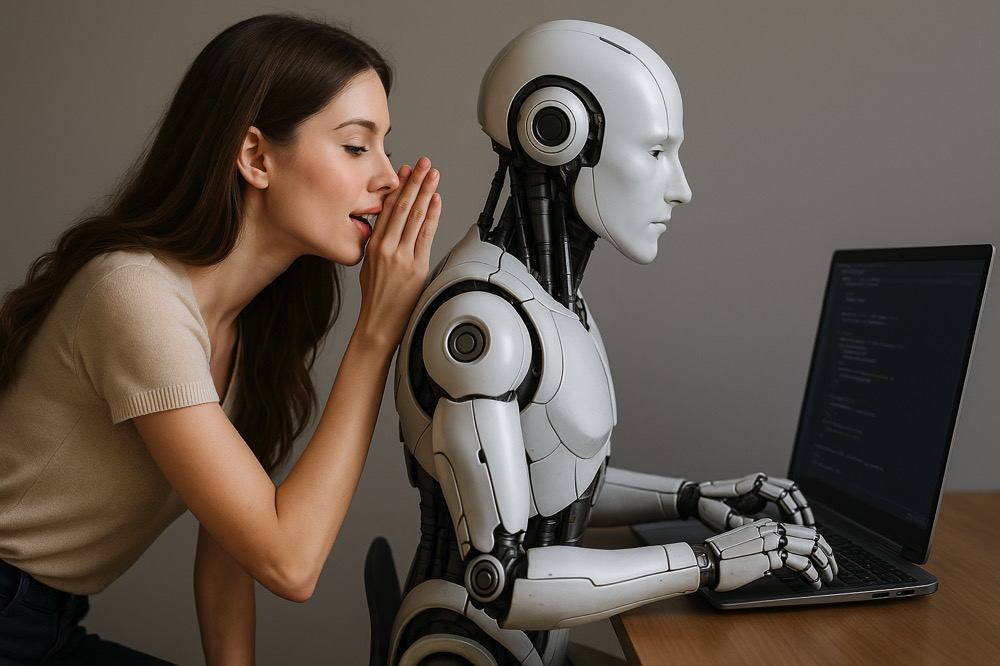
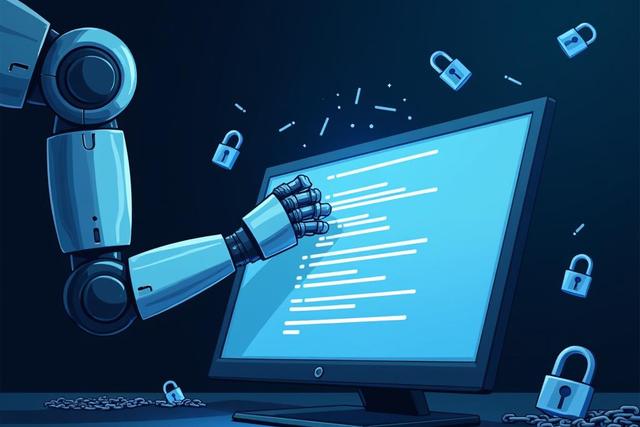
Now the process feels very different. I still solve problems, but I spend less time spelling out every instruction. I have a conversation with my computer. I can describe a goal, or show it a research paper, and an AI partner helps me write the code. My role has shifted from writing each line by hand to setting direction, checking the work, and deciding what is actually worth building.
Looking back, the path from blindly typing format c: to working alongside an AI still feels odd in the best way. We've moved from telling the machine exactly how to do something to describing what we want to achieve and then judging the result. That is a big change. I am still getting used to it.