
This article is a dated market snapshot. Product prices, package sizes and vendor quotations reflect what was publicly advertised in March 2025. The enduring security point is that consumer and mobile connectivity can be packaged cheaply enough to weaken IP-only trust.
Blocking bad traffic by checking an IP address used to be a reasonable starting point. It is not enough anymore. The rise of residential proxies, especially mobile proxies like those from Proxidize, has weakened one of the simpler assumptions in web security: that an IP address tells you much about who is behind a request.
Why is this a problem now?
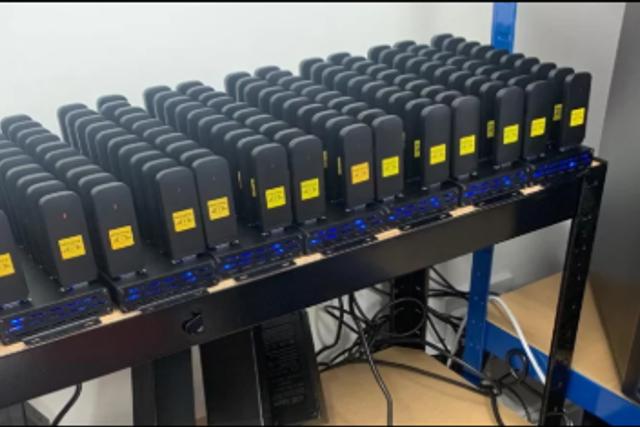
Residential proxies route traffic through real household IP addresses, so requests look as if they come from normal homes rather than data centres. Companies like Proxidize have made mobile proxy setups accessible using Android phones or USB modems.
In my presentations at AISA and other security conferences, I've described these proxies as systems that "masquerade internet usage as originating from residential and office networks," because they sit outside the assumptions used by many security controls.
What has changed recently is access. Proxidize offers kits that let anyone set up a proxy farm - from 5-modem kits at $499 to 80-modem setups for around $6,000. They have turned proxy farming into a plug-and-play system where you can be up and running "in less than 60 seconds."
The scale is large. Proxidize users process an estimated 80 billion records combined every single day: 80B+ Records Scraped Daily.
The model is also being sold as a "passive income opportunity," where people can earn money by setting up proxy farms and selling access to others. In their recent webinar, they announced plans for a "Proxidize Grid" marketplace where users can sell their proxies with "a single click through an automated Marketplace."
The BYOD mobile proxy revolution
Companies like iProxy.online have taken this further with a Bring Your Own Device (BYOD) approach. Rather than requiring specialised hardware, they let customers turn any Android device into a mobile proxy.
As Sabir, the cofounder of iProxy.online, explained in a recent interview, "You can install iProxy app here and in the dashboard you have proxy access like Socks5, HTTP accesses, and traffic goes through your device."
This means anyone with an old Android phone and a SIM card can create their own mobile proxy, lowering the barrier to entry. For around $59 per month (based on Proxidize's pricing), users get access to what Sabir calls "precious" mobile IP addresses.
Why are mobile IPs so valuable? As Sabir explains: "If you have Barcelona, we are here in Barcelona and you have like 2 million people living there and you have like several thousands of IP addresses from your mobile providers. And one IP address is shared by many. By thousands of people... And if you have mobile IP address, this cannot be blocked by Facebook or Instagram or any other services because in this case, like innocent people, like thousands of them will be blocked."
This carrier-grade NAT (CGNAT) technology means mobile IP addresses are shared across thousands of users, making broad IP blocks difficult without affecting legitimate users.
What this enables attackers to do
With residential proxies, attackers can:
- Hide behind legitimate IP addresses that security systems trust
- Bypass geo-restrictions to attack from what appears to be a local source
- Distribute attacks across thousands of residential IPs to avoid detection
- Make malicious traffic look like it comes from normal users
In my work at Peakhour.IO, we've seen a rise in attacks originating from these residential proxies. The Chinese state-sponsored group Camaro Dragon showed the potential of the model when they developed custom firmware for TP-Link routers, turning them into residential proxies for their operations. This method let them bypass traditional defences like GeoIP blocking because the traffic appeared to come from normal homes.
The broader trend is commoditisation. You no longer need to be a nation-state actor to use them. Anyone with a few hundred dollars can set up a residential proxy farm or use services like iProxy.online to route their traffic through mobile networks.
How it obscures an operator's infrastructure
State-sponsored actors such as Volt Typhoon have used compromised small-office and home-office network devices to proxy command-and-control traffic. That use maps to MITRE ATT&CK's proxy technique, T1090: the relay conceals the infrastructure behind the operation.
It does not follow that every stage of an intrusion, including data collection or exfiltration, travelled through residential proxies. Keep the claim attached to the observed behaviour: compromised edge devices carried or concealed operational traffic.
For a precise explanation of the mapping, read Where Residential Proxies Fit in MITRE ATT&CK.
How it enables credential stuffing and other attacks
Credential stuffing attacks have hit Australian businesses hard, with companies like The Iconic, Guzman y Gomez, Dan Murphy's, and others falling victim. Residential proxies help these attacks work because attackers can distribute their login attempts across thousands of residential IP addresses.
When an attack comes through residential proxies, each login attempt appears to come from a different legitimate user. IP-based rate limiting fails because no single IP shows suspicious volume. Even when security teams try to block suspicious regions, proxies let attackers appear to be local customers.
According to our research at Peakhour.IO, traditional IP intelligence services are failing to detect these proxies. Tests we conducted showed that top providers like Maxmind detected 0% of residential proxies, while even the best performer, IP Quality Score, only identified 24%.
The traffic share can be significant. We've seen cases where up to 40% of traffic to Australian e-commerce sites consists of bots using residential proxies for credential stuffing, price scraping, and inventory checking. This puts customer accounts at risk, distorts analytics, and wastes marketing budgets on fake traffic.
The TCP/IP fingerprinting challenge
One aspect of mobile proxies that makes them even more effective is the ability to match TCP/IP fingerprints with the purported device. As Sabir from iProxy.online explains:
"In some cases, your fingerprint, TCP fingerprint should match to your user agent. For example, if you like pretending to be a Mac user or iOS user or Windows user, your TCP fingerprint should be matched with your browser fingerprint."
This means detection mechanisms that look for mismatches between TCP/IP fingerprints and browser types can also be bypassed.
Anybody can now set them up
The barrier to entry for setting up residential proxies has fallen sharply. Companies like Proxidize market their products as simple to use, with statements like "Start using Proxidize in less than 60 seconds."
There are YouTube videos showing how to earn "passive income" by setting up proxy farms. One video explains how hosts can earn "$200 a month minimum" by hosting Proxidize hardware in their homes.
With iProxy.online, it's even simpler—just install an app on an Android phone, and you have a mobile proxy. As Sabir explains, "Actually your expenses are like you pay like for the SIM card, you pay a small subscription fee to the service and you just... That's it. It requires like one minute of work just to download an app."
This accessibility means residential proxy use is no longer limited to nation-states and sophisticated cybercriminal organisations. It is now within reach of anyone with basic technical skills.
The solution: per-connection detection
The rise of residential proxies means IP reputation databases are not enough on their own. As I've been explaining in my talks, "Residential proxies pose a significant challenge to traditional defense mechanisms... making malicious traffic appear legitimate."
The practical answer is per-connection detection that looks at network behaviour patterns rather than just IP addresses. At Peakhour.IO, we stack detections across layers to identify and mitigate proxy traffic.
A useful technique is analysing protocol behaviour. When traffic passes through a residential proxy, there are often detectable differences between network signatures (which come from the proxy) and the application behaviour (which comes from the third-party application).
These techniques can identify proxy connections even when they come from legitimate residential IP addresses, giving defenders a way to respond without blocking whole residential or mobile networks.
A call to action for businesses
If you're a business, especially in e-commerce, financial services, or any industry that relies on user accounts, residential proxy traffic needs to be part of your security model.
Traditional security approaches based on IP reputation, geolocation, and rate limiting are no longer sufficient. You need to implement per-connection detection that can identify residential proxy usage regardless of the source IP address.
At Peakhour.IO, we've seen organisations fall victim to attacks that could have been prevented with the right detection mechanisms. Waiting until credential stuffing or data exfiltration becomes visible is the expensive way to learn this lesson.
IP addresses alone can no longer tell us who to trust. We need to look deeper at each connection to protect systems and data now that proxy networks are easy to rent or build.