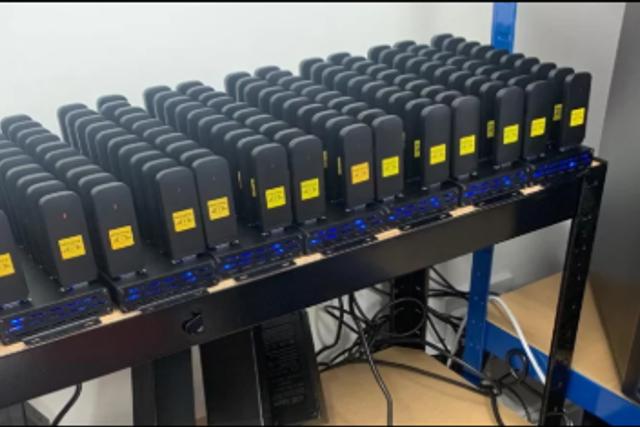

Automated attacks against identity and access management (IAM) systems are now a routine account protection problem. Malicious bots drive account takeovers (ATO), credential stuffing, brute-force login attempts, and fake account creation. As these attacks adapt, traditional IAM controls such as password policies and even multi-factor authentication (MFA) are not enough on their own.
Identity and access management leaders should treat bot management as part of the IAM control set, not a separate website security add-on. A dedicated capability helps reduce avoidable financial and reputational losses from account compromise. It also gives organisations a way to manage the risks created as AI agents become regular users of web applications and APIs.
Introduction
Some estimates suggest nearly half of all traffic is automated. That mix matters: useful crawlers and monitoring tools are part of normal internet traffic, but malicious automation is built to test web applications at scale. IAM systems, which control access to sensitive user accounts and data, are a primary target.
The most common bot attacks targeting IAM include:
- Credential Stuffing: Attackers use lists of stolen usernames and passwords from third-party data breaches to gain unauthorised access to user accounts. This attack vector is effective because password reuse is still common.
- Brute-Force Attacks: Automated scripts guess passwords for known usernames, often targeting login endpoints for platforms like WordPress and Magento.
- Fake Account Creation: Bots create fraudulent accounts at scale, which can be used for spam, malware distribution, or to abuse promotional offers.
Recent attacks on major Australian retailers like The Iconic and Dan Murphy's show the practical impact. These incidents, driven by credential stuffing, resulted in reputational damage and financial loss, forcing the companies to issue refunds and publicly address security concerns.
Analysis
Defending IAM systems starts with why common controls fall short and where bot management adds useful signal.
Why Traditional IAM Defences Fail
Attackers have adapted their techniques to bypass legacy security controls. Simple IP-based rate limiting and reputation lists struggle against the combination of residential proxies and anti-detect browsers:
- Residential Proxies: Attackers route their traffic through large networks of IP addresses belonging to real residential internet connections. This makes malicious traffic appear legitimate and allows attackers to bypass IP-based blocking and geolocation restrictions. Our own tests show that even leading IP intelligence services fail to detect the vast majority of residential proxy traffic.
- Anti-Detect Browsers: These specialised browsers allow attackers to spoof their digital fingerprints, mimicking legitimate user devices and browser configurations. This weakens many JavaScript-based challenges and fingerprinting techniques.
Used with automation suites like OpenBullet, these tools let attackers run "low and slow" distributed attacks that blend into normal traffic. For more information on these tools, see our guide to enterprise bot management.
The Flawed Logic of CAPTCHA
For years, CAPTCHA has been the default way to distinguish humans from bots. It is now a weak control when used on its own. Our research shows that visible CAPTCHAs have a severe negative impact on user experience and conversions. Studies have found that CAPTCHAs can reduce form conversions by up to 40%, as frustrated users abandon purchases or sign-ups.
Modern bots can also solve CAPTCHAs with high accuracy, often more effectively than humans, by using CAPTCHA-solving farm services. Relying on CAPTCHA alone creates friction for legitimate users while providing a false sense of security. Modern bot management uses invisible challenges and behavioural analysis to validate users without disrupting their session.
Modern Bot Management Capabilities for IAM
An effective bot management solution provides a multi-layered defence that goes beyond simple signatures. Key capabilities include:
- Advanced Rate Limiting: Instead of relying on IP addresses, modern solutions group requests using more stable identifiers like TLS/HTTP2 fingerprints, device characteristics, or a combination of headers. This helps detect distributed attacks from a single malicious tool, even as it rotates through thousands of IPs.
- Network and Device Fingerprinting: By analysing the unique characteristics of a client's TCP and TLS implementation, it is possible to identify the underlying software making the request, regardless of the user-agent header. This helps distinguish between real browsers and automated scripts.
- Behavioural Analysis: Systems can model normal user behaviour—such as mouse movements, typing speed, and page navigation—to identify anomalies that indicate automation.
- Residential Proxy Detection: Specialised techniques are required to identify traffic coming from residential proxy networks, which is a strong indicator of malicious intent.
- Breached Credential Integration: By checking login attempts against databases of known breached credentials, security teams can apply additional scrutiny to high-risk authentication events.
Together, these controls give IAM teams more useful decision points than an IP address, a password check, or a CAPTCHA challenge alone.
The Next Frontier
The next major change in automated traffic is agentic AI. As reasoning models like DeepSeek become more accessible, we are entering an era where AI agents are becoming primary consumers of APIs and web applications.
These are not just the rigid scripts of the past. AI agents can reason, plan, and adapt their behaviour in real-time based on a system's responses. They can analyse an entire API surface in seconds and generate complex interaction patterns that human developers would be unlikely to try manually.
This creates a harder IAM problem. Bot management has usually looked for patterns that differ from normal human behaviour. AI agents can make those patterns less reliable by imitating user behaviour while still operating at machine speed. The line between human and automated traffic blurs.
IAM leaders need bot management solutions that can adapt to this shift. The future of bot management will not only be about blocking bots; it will also be about deciding which automated agents are acceptable, under what conditions, and with which controls. This requires a shift from static, rule-based security to contextual analysis that understands and adapts to agent behaviour, distinguishing between legitimate AI assistants and malicious ones. Organisations that wait until agent traffic is common will have less time to distinguish useful automation from AI-driven attacks.